Contemporary music
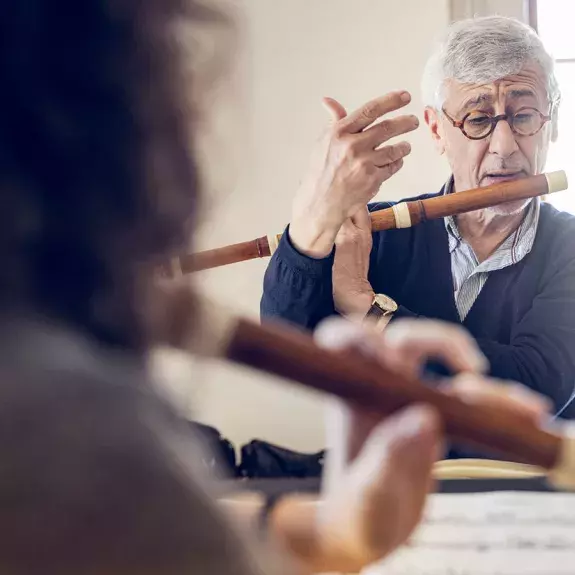
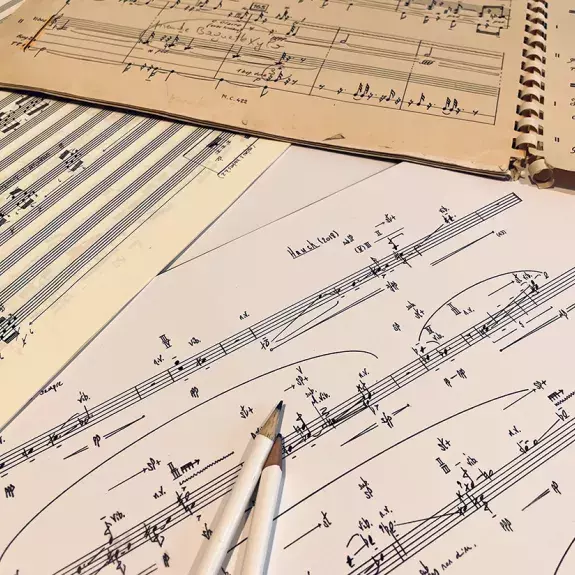
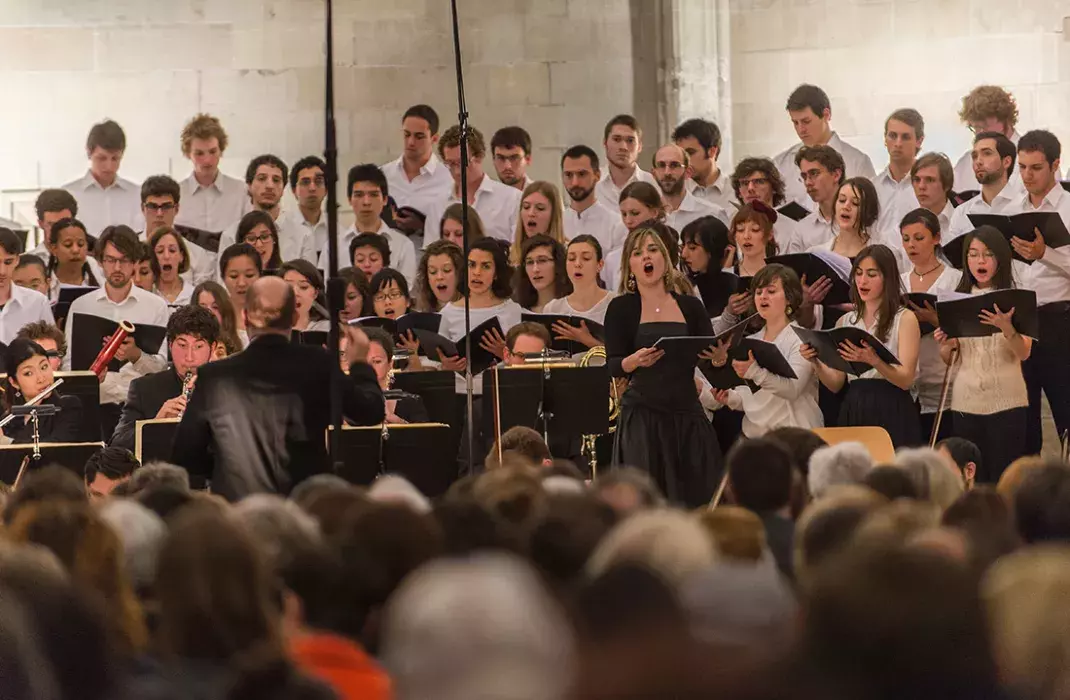
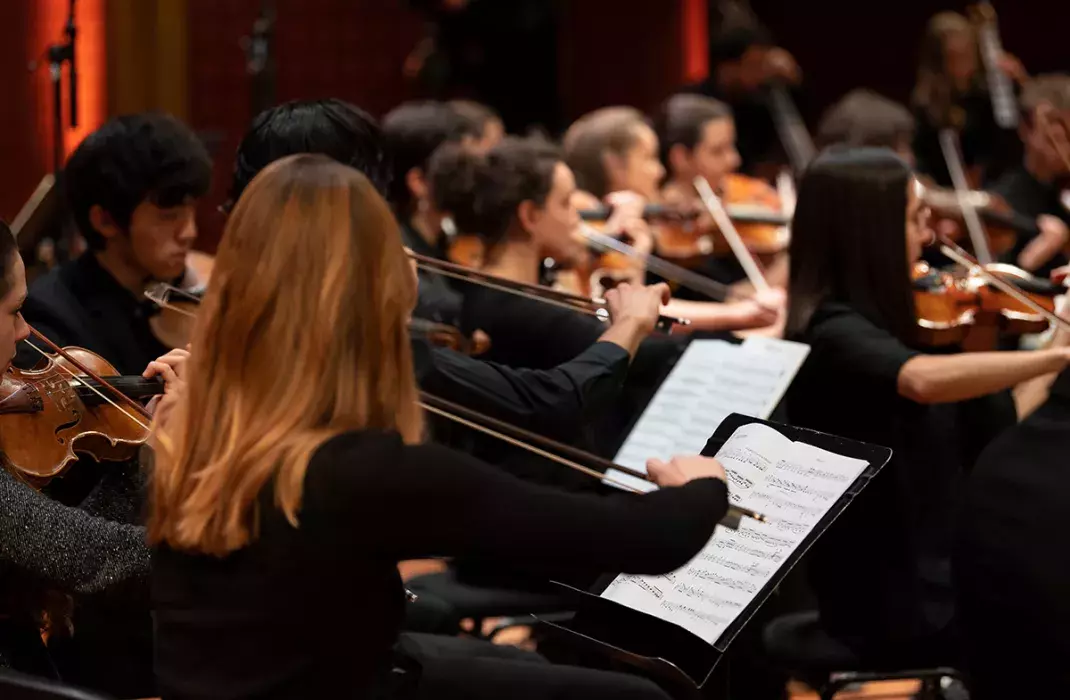
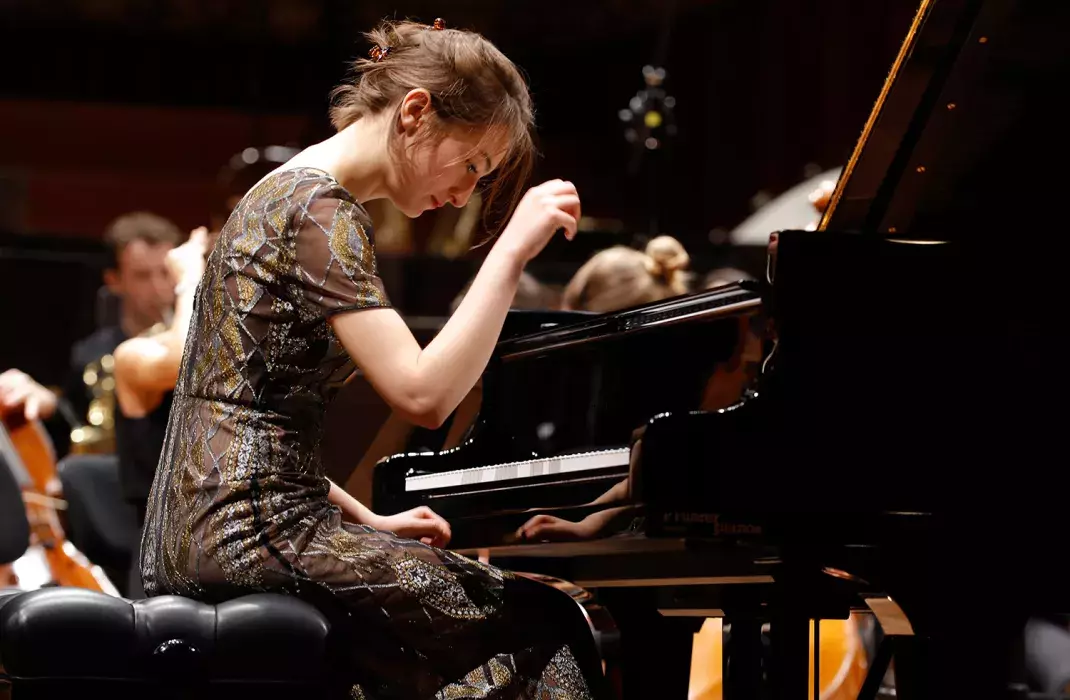
The Haute école de musique de Genève (HEM) promotes contemporary music, from the great repertoire of the second half of the 20th century to the various facets of contemporary creation.
During their studies, whether at Bachelor's or Master's level, students are encouraged to explore these repertoires, whether as instrumentalists or solo singers, in chamber music or in large ensembles. Contemporary and creative music requires the development of specific skills, which are addressed in masterclasses, seminars, concerts, projects and research workshops dedicated to these themes.
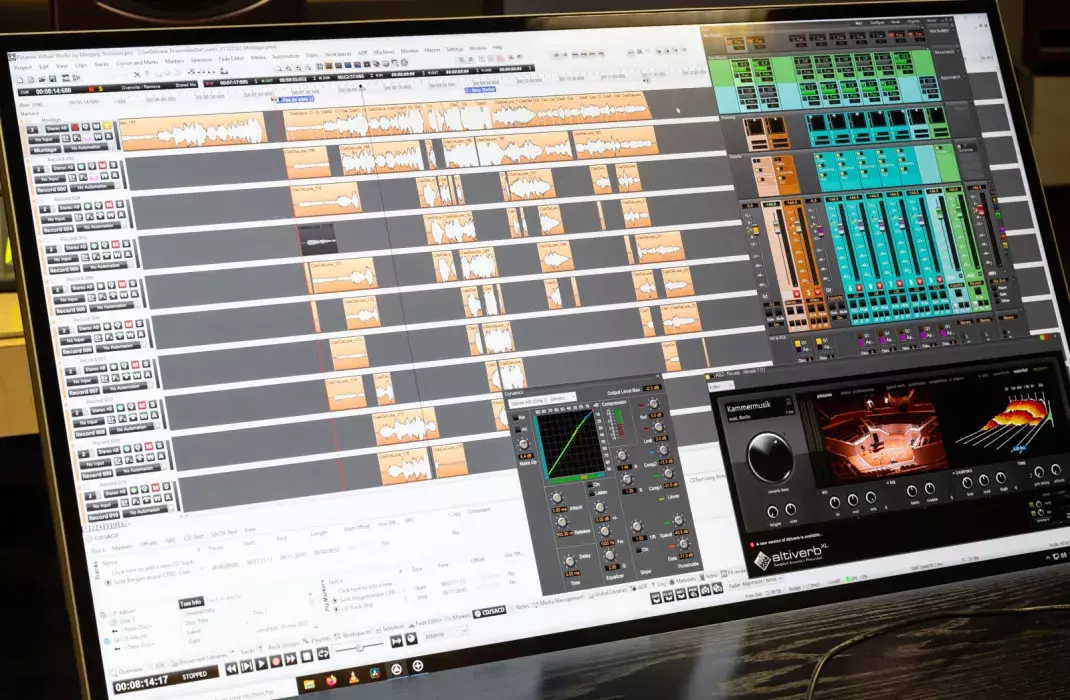
To address these repertoires in the training of musicians, the HEM relies on a teaching staff specialised in contemporary practices and active in the field of creation, on its research department, which encourages a reflective and documented approach to these practices, and on the team of sound engineers at the Centre for Electronic Music, who assist students in the production of mixed pieces. The school also encourages collaboration between instrumentalists, singers and composition classes. Finally, it develops partnerships with renowned contemporary ensembles and festivals (Ensemble Contrechamps, Festival Archipel, Festival des Jardins Musicaux de Cernier, Lemanic Modern Ensemble) and collaborates with the Musicology Unit of the University of Geneva.
For the most passionate students or those wishing to focus their career on a professional practice of contemporary music, the HEM offers two specialised courses: the Master's degree in contemporary music, which is mainly aimed at performers, and the Master's degree in performer-composer, which combines performance, composition and/or improvisation.
Events in 2025–2026
Katharina Rosenberger - October 3, 2025
Spuren
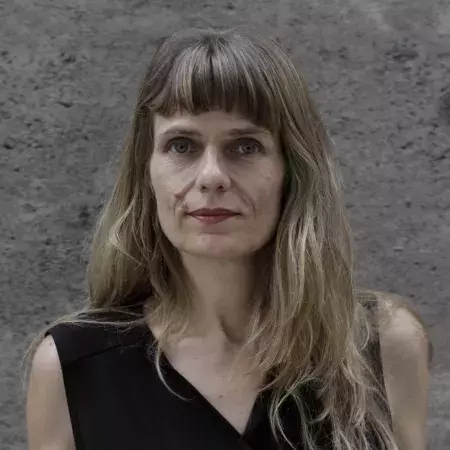
Katharina Rosenberger, born in Zurich, is a professor of composition and has taught composition and sound art at the University of California, San Diego, and the University of Music in Lübeck. She currently holds the position of professor of composition at the HEM - Haute école de musique de Genève / University of Music in Geneva, and is co-artistic director of SONIC MATTER, a platform and festival for experimental music in Zurich.
"SPUREN takes the listener back to the early 1940s, an extremely difficult and turbulent period in Germany, not only for my family, but for the whole world. This composition is dedicated to my father, his sister, my aunt, and my grandparents, who fled East Prussia to return to their native Switzerland in early autumn 1944. I have heard many stories about their flight, the separation of the family, the preparations and the departure, and of course I have heard their grief for their lost childhood.
The composition SPUREN, with its ever-increasing waves of sound and electric guitar tones that engulf the audience, evokes the approach of the enemy and the inevitable fate of fleeing and abandoning one's home and hometown. SPUREN also evokes the image of the lost homeland – partly clear, partly distorted or increasingly blurred – that emerges from the depths of memory.
Katharina Rosenberger's website
John Cage - December 11, 2025
Sonates et Interludes

Although John Cage was not the first artist to modify the sound of a piano by inserting objects into it, the American composer broke new ground by devoting a significant body of work to the prepared piano, transforming his instrument into a miniature percussion orchestra. In particular, he wrote the cycle Sonatas and Interludes, which established his success on the international music scene and remains particularly popular today. It is performed in its entirety by students from the HEM piano classes, prepared by Cédric Pescia.
Trio Catch - December 11-12, 2025 & March 27, 2026
Masterclasses in composition and chamber music

The Trio Catch, a chamber music ensemble specialising in contemporary music for cello, clarinet and piano, is in residence at the HEM for this academic year. They will collaborate with Katharina Rosenberger's composition class to give a masterclass in composition (11/12/25) and create works written especially by the students for their training (27/03/26). They will also give a masterclass in contemporary chamber music (12/12/25) to prepare our students for the various events of the year.
"Catch! Captivating the audience with music is the ambition of the Trio Catch! Appreciating the particular timbre of the trio's instruments through virtuoso playing while seeking a common and unique sound is what makes Trio Catch so special. It is composed of Martin Adámek (clarinet), Eva Boesch (cello) and Sun-Young Nam (piano).
The trio has been collaborating for 14 years with numerous composers - including Mark Andre, Georges Aperghis, Beat Furrer and Helmut Lachenmann - on various recordings for disc and radio. Their first CD, ‘In Between’, was released in 2014 on the Col Legno label, followed by their second CD, ‘Sanh’, in March 2016. In 2019, the Bastille Musique label released the CD ‘As if’, which received the German Record Critics' Award (Preis der deutschen Schallplattenkritik), the Supersonic Award Luxembourg and the Clef d'Or from ResMusica in France. Their latest album, ‘Gassenhauer’, was released on the Bastille Musique label in 2024.
György Kurtág - February 11-13, 2026
Jatekok (complete)

Three Geneva music institutions (the Haute école de musique, the Conservatoire populaire de musique and the Conservatoire de Musique de Genève) are joining forces for a unique event: the complete Jatekok, a collection of educational pieces for piano composed by Hungarian composer György Kurtág, who will celebrate his 100th birthday in 2026 without ceasing his creative activity. György Kurtág has strong ties with the Haute Ecole de Musique de Genève: he has given masterclasses there and his music is regularly featured. The Jatekok are a particularly good example of his art of aphorism and miniature, with a whole musical world and a wide range of emotions expressed in just a few notes. The first in a series of events dedicated to the Hungarian composer this year at the HEM, this complete work is performed by Cédric Pescia and brings together students from the three institutions. It will take place in the Franz Liszt Hall of the Geneva Conservatory of Music as part of the Open Bach festival.
Nik Bärtsch - March 12, 2026
Masterclasses

Swiss keyboardist and composer Nik Bärtsch has been invited by the HEM percussion class to give a two-day masterclass on his works, followed by a concert showcasing his music. A musician who believes in ‘ecstasy through asceticism’, Nik Bärtsch creates works that resemble rituals and are linked to minimalism. He describes his art as follows: "My thinking and my music are inspired by the tradition of urban space. They do not stem from a national or stylistic tradition, but from the universal sound of cities. The city, in its roaring diversity, demands an ability to focus on the essentials: to measure one's actions, to remain silent in the right place. This music draws its energy from the tension between compositional precision and the self-circumvention of improvisation. From self-imposed restriction comes freedom."
Luciano Berio - March 17 & April 26, 2026
Sequenzas and Coro

The HEM is honouring Italian composer Luciano Berio in its 2025–2026 season. Two concerts are entirely devoted to him: one based on his Sequenzas (17 March 2026), the other on Coro (26 April 2026).
In each of his Sequenzas, virtuoso works written for a solo instrument and composed over a period of more than 40 years, Berio seeks to ‘establish a special rapport between composer and performer’ that is ‘testimony to a human relationship’ (Luciano Berio, reference cited here). Thus, these pieces were conceived in close collaboration with the artists for whom they were intended. They often require the exploration of numerous extended techniques, and even a certain theatricality.
"Luciano Berio was one of the few avant-garde composers open to all types of music, which he articulates and works into his compositions. He thus integrated certain popular sources, including pop music and jazz, more or less explicit quotations from the Austrian repertoire, while drawing on poetic texts and seeking to give an ethical and political dimension to his message. This is the case with his great piece for choir and instruments, Coro, which combines popular and scholarly sources, contrasting individual and collective voices, songs of love and songs of revolt, archaic sources and modern forms, popular poetry and a politically engaged poem by Pablo Neruda.
(Text by Philippe Albèra)
Luis Naón - March 24, 2026
Caprices 1 & 2 for violin and electronic

French-Argentinian composer Luis Naon, professor of electroacoustics at the HEM since 2006.
Here is how he describes the work performed during this concert by the HEM's Hémisphère ensemble:
Caprice n.m. a sudden and fleeting desire, based on fantasy and mood.
The idea for Caprices arose from a proposal to explore and research synthesis using physical models – the production of electronic sounds based on the modelling of various strings and exciters – in relation to an instrument. Initially, this idea was similar to the creation of a study book. The virtuoso character and fanciful nature, as well as the frequent and unpredictable changes in the synthesis itself during the preparatory work, led to the work being given this more appropriate title. These Caprices are doubly virtuosic. They offer the instrumentalist a fast, bravura piece and, in contrast, a slow piece, no less virtuosic, but focused on volubility and timbre. Lasting approximately 4 to 5 minutes each, these small, demonstrative pieces each capture, in their own way, a specific aspect of acoustic and computer instruments. The situation and musical character of these pieces is concertante: the visible soloist is surrounded, supported or contradicted by a crowd of virtual instruments, sometimes close to him, sometimes very distant. Rhythm, phrasing, timbre and morphology are the points of convergence between these two worlds. The production schedule for these Caprices spanned nearly a year and a half of research in partnership with the developers and engineers at IRCAM, and in close collaboration with Manuel Poletti, whose approach and specific tool design were an invaluable contribution.
Caprices 1 & 2 for violin are the first of three diptychs which, under the name ‘6 Caprices’, form part of the Urbana cycle.
Christina Kubisch - April 16-23, 2026
Archipel / HEM Genève
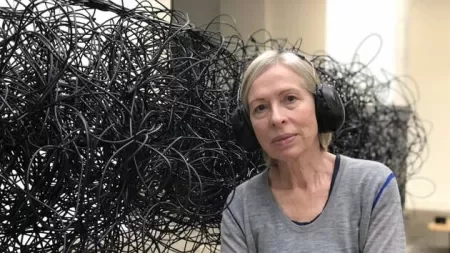
German sound artist Christina Kubisch is being honoured by both the Archipel Festival and the HEM Geneva. She will give several seminars and masterclasses between 16 and 21 April, followed by Identikit, a piece for five pianists (on a single piano!) performed on 23 April by HEM students prepared by Cédric Pescia.
Kubisch's practice ranges from performances and concerts to video and visual works, but she is best known for her sound installations and electroacoustic compositions. Kubisch has created her own artistic strategies by developing and transforming technologies such as ultraviolet light, solar energy and electromagnetic induction. In her installations, she merges audio and visual arts to create multisensory experiences for participants, who are invited to become active as listeners and performers. Since 2003, she has been producing the ongoing series ‘Electrical Walks’ around the world, sound walks in urban spaces where electromagnetic fields are amplified and made audible through specially designed headphones.
Peter Ablinger - April 26, 2026
Archipel / HEM Genève

The Archipel Festival and the HEM pay tribute to Austrian artist Peter Ablinger, who passed away in the spring of 2025, and who expressed himself at the intersection of visual and musical arts. Several of his chamber music and electronic works will be performed by HEM students prepared by Joshua Hyde.
‘Sounds are not sounds! Their role is to divert the attention of the intellect and soften the senses. Even hearing is not hearing: hearing is what creates me.’ ‘ Peter Ablinger, born in 1959 in Schwanenstadt, Austria, is, according to Christian Scheib, a ’mystic of elucidation‘ whose ’calls and litanies aspire to knowledge". But at the same time, the composer, who, after studying graphic arts, studied with Gösta Neuwirth and R'man Haubenstoc'-Ramati and has lived in Berlin since 1982, is a sceptic, fully aware of the cultural rules of the game and the (bad) habits imposed by tradition: ‘So let's continue to play, affirming that sounds are there to be heard (and not to be listened to, which is something else), and to listen in order to hear. I don't know any more than that.’ (Christian Baier)
Betsy Jolas - May 5, 2026
Solo pieces and chamber music

Under the guidance of Maroussia Gentet, professor of chamber music with piano at the HEM, HEM students are exploring the rich catalogue of Franco-American composer Betsy Jolas, who will celebrate her 100th birthday in 2026. Betsy Jolas is an artist who has won numerous awards. She has been honoured by the Copley Foundation in Chicago (1954), the O.R.T.F. (1961), the American Academy of Arts (1973), the Koussevitsky Foundation (1974), and has been awarded the Grand Prix National de la Musique (1974), the Grand Prix de la Ville de Paris (1981) and the Grand Prix de la SACEM (1982). She has taught analysis and composition at the Paris Conservatoire and at several American universities. A key figure in contemporary music since the mid-20th century, her works have been performed around the world by some of the most prestigious soloists and orchestras, including Elisabeth Chojnacka, Kent Nagano, William Christie, Claude Helffer, Kim Kashkashian, and others. For this concert, solo and chamber music works will be performed by students from the HEM.
Sophia Gubaïdulina - May 30, 2026
Chamber music at musée Tavel
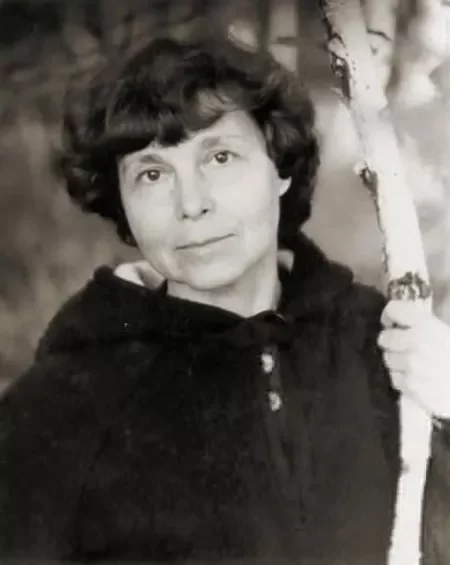
The Ensemble Vide, an interdisciplinary research and creation platform, invites the HEM Geneva to the Maison Tavel for its project Sofia, dedicated to the Russian composer Sofia Gubaïdulina, who passed away in 2025. The groups are made up of HEM students prepared by the institution's chamber music teachers.
This is how the ensemble describes the project: "Several groups of musicians take over the domestic spaces of Maison Tavel. They perform a selection of works from the composer's vast chamber music repertoire. Curated specifically for this venue and occasion, the choice of pieces allows for a multitude of listening moments and spaces. The definition of chamber music then takes on its full meaning, reconnecting with the private spatial character of this music."
Contacts
Cédric Pescia - piano
Maroussia Gentet - musique de chambre
Joshua Hyde - saxophone, performer-composer
Philippe Spiesser - percussions
Katharine Rosenberger - composition
Luis Naón - composition électroacoustique
Gilbert Nouno - composition multimedia
Johann Vacher - coordination
 ©
©