Talia
Bachir-Loopuyt
Head of the Ethnomusicology Program - Professor of Ethnomusicology
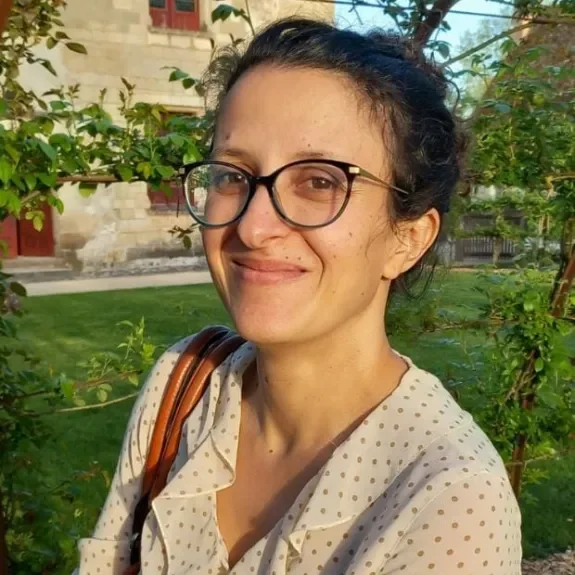
Talia Bachir-Loopuyt is an ethnomusicologist and anthropologist specialising in the music of the Maghreb and the Middle East (in particular Turkey), and studying its dissemination and transmission in Europe (Germany, France, Switzerland). She trained in Germanic Studies at the École Normale Supérieure in Lyon (leading to the Agrégation, 2004), while also studying oriental music (oud, kementche, modal improvisation) at the École Nationale de Musique in Villeurbanne and in Turkey.
Her dissertation, written under the joint supervision of EHESS Paris and Humboldt University (Berlin), focused on world music festivals and the ideal of a plural society in Germany. As a post-doctoral researcher (University of Saint-Etienne, University of Lausanne), she worked on the dissemination of Turkish music in France and on the visibility of Islam, while pursuing work on the history of ethnomusicology, child musicians and music in plural societies.
Since 2016, she has been a senior lecturer at Tours, where she contributed in particular to the creation of the Master Music and Human Sciences (with the University of Poitiers). Involved in several academic organisations (SFE, IMS, ICTM) and journal committees, she is also co-director of the Haizebegi festival in Bayonne and a member of the scientific board of the CMTRA - Ethnopôle Musique, territoires, interculturalité.
Patrik Vincent
Dasen
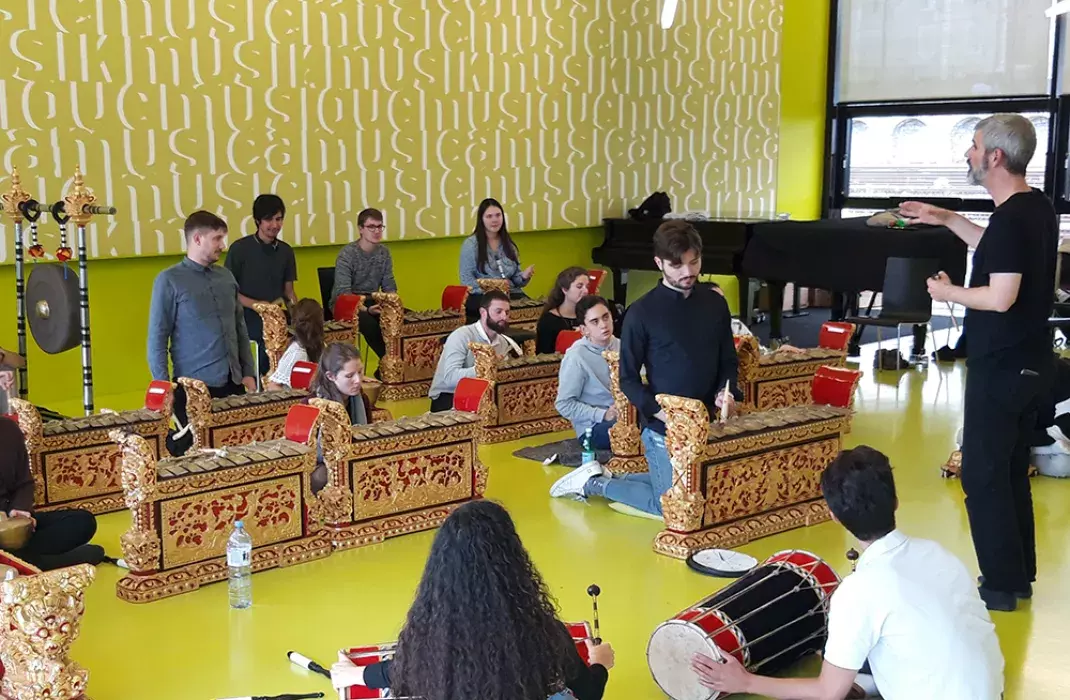
Professor of Ethnomusicology, Master’s Research Seminar, World Music Workshop
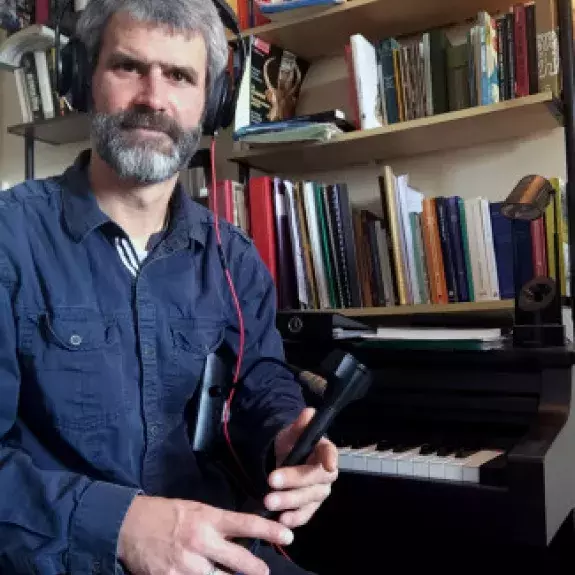
Patrik Dasen graduated in ethnomusicology from the Université Paris X Nanterre (Maîtrise, 1999) and the Université de Nice Sophia-Antipolis (Master 2, 2009), where he also completed a doctoral thesis in March 2020 entitled "Becoming and Being a Maker of Irish Bagpipes Uilleann Pipes: Between Deterritorialization and Heritage Preservation," under the supervision of Prof. Luc Charles-Dominique. His research focuses on the processes of transmission and heritage preservation of musical traditions.
He worked for ten years at the Ateliers d'ethnomusicologie de Genève as the head of educational activities and public relations. He also led, with a small team, the cataloging and digitization campaign of the Archives Internationales de Musique Populaire (AIMP, 2005-2011) by Constantin Brailoiu, which are now fully accessible at the Musée d'ethnographie de Genève thanks to this preservation effort. He has been teaching ethnomusicology and the sociology of contemporary music at the Haute école de musique de Genève since 2008.
Learn more about Patrik Vincent Dasen
 ©
©