
Radon is a natural radioactive gas found in uranium‐rich and permeable soils. It escapes from the ground, diffuses into the air and accumulates in buildings. When inhaled, radioactive radon progenies settle in the lungs and become a direct cause of lung cancer. Radon is the second leading cause of lung cancer after smoking, and more than one in ten cases are linked to radon, affecting hundreds of thousands of people worldwide every year.
In January 2018, the EU Council Directive 2013/59/Euratom entered into force in the EU and in Switzerland. The legal limits for indoor radon concentration have been lowered by a factor of 10 for workplaces and by a factor of 3 for schools and homes. Across Europe, millions of buildings are non-compliant and require radon mitigation.
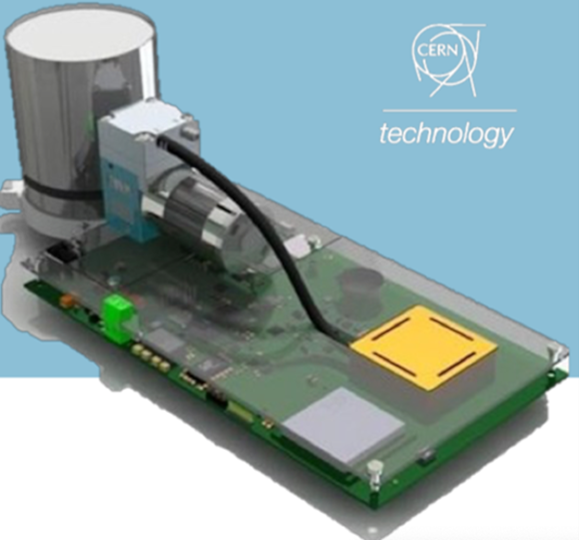
In certain situations, invasive mitigation through building renovation is highly impractical or even impossible, for example in historical buildings or in densely populated urban environments. In historical buildings it is often the case that HVAC systems are not present and cannot be installed. For these cases we have been working on an innovative solution, which tackles directly the radioactive dose to the lung (i.e. the actual cause of cancer) rather than the radon concentration. This solution is based on existing devices designed for indoor air quality with improved filters, coupled to our RaDoM (Radon Dose Monitor) technology, developed by a CERN spin-off, which provides real-time assessment of the dose received by the lungs.
Project partner(s)
Project leader - team
Stavroula Pallada
(HEPIA),
Gilles Triscone (HEPIA)
,
Axel Baxarias Fontaine (HEPIA)
