-
From Cloud Aesthetics to Alternative Circuits and Assemblages
From the seminal “cloud” metaphor to green buttons and blue thumbs-up emojis, our interactions and dominant discourses around the digital embody a specific capitalistic agenda: the one of technology as a commodity fetishism we simply consume and later trash without understanding how it operates. In addition, these interfaces and metaphors hide the complex human, material and environmental assemblages enabling, operating and optimising our digital processes. Drawing from this context, the article is intended for artists and interaction designers interested to critically engage with technology and their “blackboxes”. It argues for the importance of bridging design with social sciences and ethnographic fieldwork. Through this lens, it posits that designers can, first, better understand the lifecycle and infrastructures of our electronic objects as well as, second, create artefacts that nuance and critique these dominant narratives and beliefs around digital “immateriality”.
-
The Milieu is the Message.
Today there is a plane on which the battle of images is raging, an infra-iconic plane on which the fate of images and of those who look at them – but also of the things that look at them, non-human entities of artificial vision – is largely determined. This is the plane of computational technological infrastructures, and the norms that determine their operation: the plane of the coding of reality into information, of the digitisation and storage of data. It is in technology – the dual place of both material infrastructure and computer code – that the fate of our freedoms and our imaginations, and that of images with them, hangs in the balance.
-

AIAIA Sweatshop
The AIAIA Sweatshop exhibition (held from May 17 to June 21, 2024 at the artist-run space àDuplex, in Geneva) explored through the means of art, behind the media resonances of the acronym IA/ AI, some paradoxes of the material dimensions of artificial intelligence. In a series of "rooms", AI's relationships with history, machines, the body, identities and technopolitics were put into context and questioned, far from the ethereal, fascinating or frightening images of a new technological power as immaterial as inexorable. This exhibition was born from a collaboration between the Digital Humanities seminar of Béatrice Joyeux-Prunel at the University of Geneva and the Work.Master seminar of David Zerbib at HEAD.
-

Si (1-bit computer)
The Si (1-bit computer) project, created by Raphaëlle Kerbrat at the Paris École des Arts Décoratifs as part of her PhD thesis entitled, ‘Le poids des données, paradoxes matériels et sensibles du numérique’ (‘The weight of data, material and sensitive paradoxes of digital technology’), offers to make the physical imprint of a computational process discernible. Si (1-bit computer) is based on the physical decomposition of a binary system and draws on the manipulation of silicon, a semiconductor material used to make transistors, which are at the core of digital electronics. Si (1-bit computer) operates by enlarging physical and temporal scales, stretching a logical operation over several seconds and amplifying the initial size of the components. Matter is a central element in this project, which reveals the workings of our digital devices in a way that is at once archaic and poetic.
-
Kasiterit as a Speculative Guide to Bangka
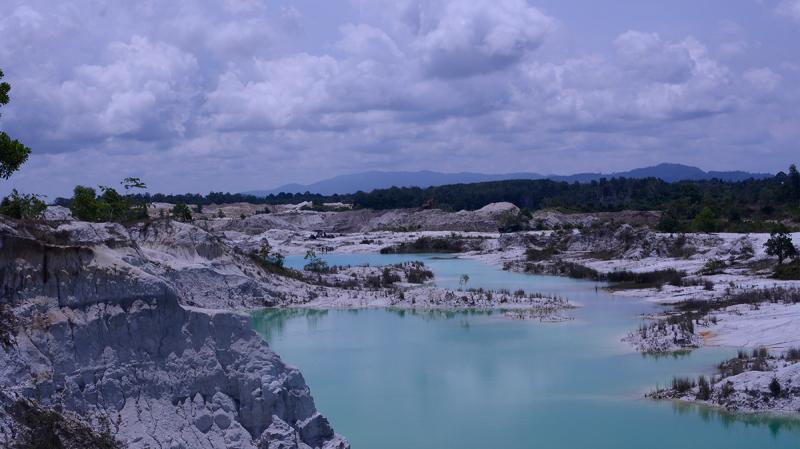
One-third of the global tin supply is extracted from Bangka island in Indonesia. Tin is the most impacted mineral by the upcoming technological development, which includes artificial intelligence and technology for renewable energy. Natasha is a solar-powered A.I. voice, and in Kasiterit, a short film by Riar Rizaldi, they trace their genealogy and the truth of their origin; from the capital liquidity to labour dynamic. With their feminised voice—as quite often performed by other AI-powered voice assistants produced by tech-companies, Natasha narrates the emergence of tin in Bangka island and their existence from the perspective of tropical anthropology of nature, value theory, philosophy of time, genetic mutation, geopolitics, and automation. Kasiterit is available to watch on Issue's website from mid-July to mid-August 2024. It is accompanied by an excerpt from Rizaldi's related PhD research.
-
Bedrocks for Digital Systems
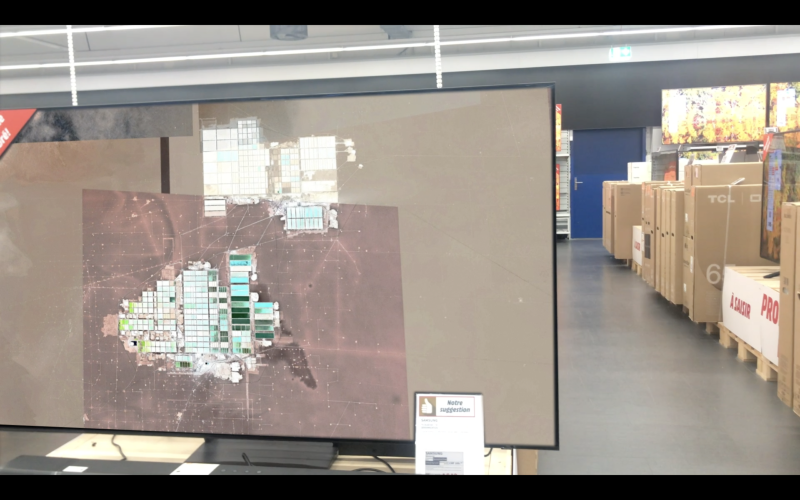
This video by Mabe Bethônico, edited in collaboration with Victor Galvão, who also created its sound, derives from a text constructed using a cut-up technique on an article by Lee Mackinnon titled "Technologies of Romance: Mineralogy: a digital account," published in the Science Museum Group Journal, 2019. The textual parts in the video are elusive, rhythmically relating to the work environment of extractive sites from which the main minerals used in our electronic devices are sourced, as well as to the large sales floors of digital appliances. Images were taken in Minas Gerais and Switzerland by Mabe Bethônico, but the video also includes content from her project "Museum of Public Concerns," a visual archive compiled from multiple sources and contributors. These include a firefighter’s report, evaluating the Brumadinho disaster, images made by members of the Maxakali community from Minas Gerais, and photos made by inspectors from the Brazilian Ministry of Labour and Employment, among others. The narrative invites to reflect on the environmental and social ramifications of technological dependencies, reminding of the costs of convenience and innovation.
-
Learning from Waste
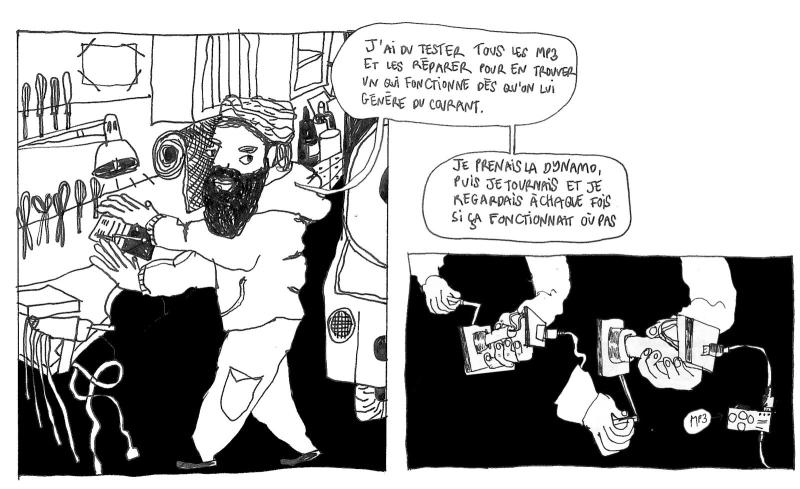
This contribution looks at digital technology through the prism of waste and waste’s potential. The contribution is based on a case study from an ethnographic survey that Bloch has been conducting with Thibault Le Page and Nicolas Nova since 2022 at HEAD – Genève (HES-SO). One of the survey’s aims is to highlight the various forms of reappropriation and transformation that can be achieved with elements from digital equipment such as smartphones, computers, headphones, connected objects, etc., or with their components.
-
The Future is Unmanned
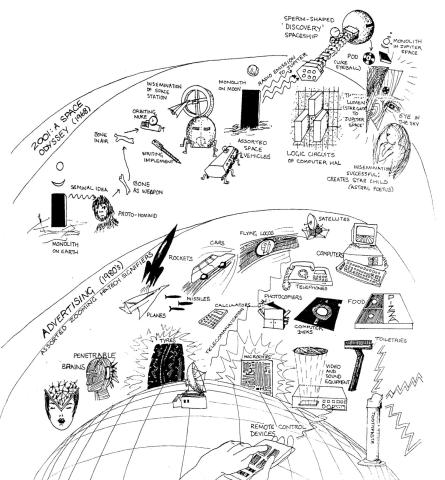
Why does the future dream of being mapped out, gridded, and automatically piloted by the culture of high technology? How does technology manage to present itself as a marker of civilisation, affirming the supremacy of certain bodies over others, and reinforcing a symbolic and social order that separates and immunises human beings from waste, the gremlins, aliens, the inhumans and other undesirable bodies deriving from the 'civilised human'? Over the last 40 years, voices have been raised to question the great narrative of Western technology. These voices ask: ‘Who counts as an agent of technology, as a human agent, and consequently as an agent of the future?’ It is from these areas of contestation, whose return has become impossible to ignore today, that this article seeks to decipher the dream of safe, clean, objective, and rational techno-governance, which has turned out to be anti-terrestrial, excremental, aberrant, and sexually aggressive.