-

Foreword – Pour mémoire
Jean-Pierre Greff has been particularly involved, within the Franco-Swiss area, in the pedagogical and political development of the Master’s thesis in Art and Design schools. In this interview, Greff comes back to this formalisation, which dates back about 20 years, and how his convictions led him to think about the open interdependence link between theory and practise. This link now guides the making of Master’s theses at the HEAD – Genève. -
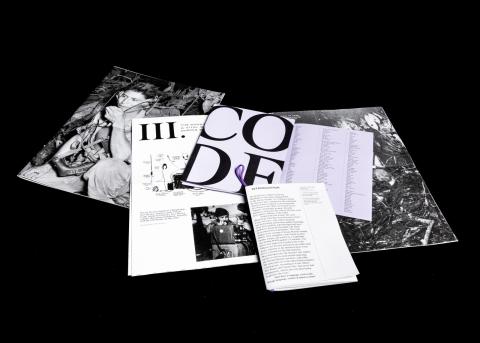
Introduction – Le mémoire, une formation intellectuelle et sensible
Each year, the Master’s theses produced at the HEAD – Genève bear witness to great thematic, methodological and formal wealth. As mentioned by Lysianne Léchot Hirt and Anthony Masure (respectively head of education coordination and head of research at the HEAD – Genève) Master’s theses nonetheless fall within a clearly defined pedagogical framework, not only allowing students to contextualise their practise but also opening the doors to research, teaching and hybrid artistic practises. Insightful hypotheses and the setting out of a methodology proper to the fields of art and design are the main criteria for a successful thesis.
-

Pourquoi
Pourquoi (Why) is an essay that considers the position of the author within a collective form of cinema. Pourquoi articulates film analysis, accounts of experimentations and descriptions of devices. Pourquoi guides and questions an action-research, on which it also gives a report. A text montage, Pourquoi tries to answer a series of questions: how can you make films with children? How should you interact with them, their parents and the context to create a story? As an author, how should you give the floor to amateurs playing their own role? How can you let them transform the original project? How can you depart from authority, collaborate and make art a collective process? The preface is by Claude-Hubert Tatot, Greg Clément’s tutor for this Master’s thesis in the Visual Arts’ TRANS– Socially Engaged Art Practices program. -
To Destroy a World
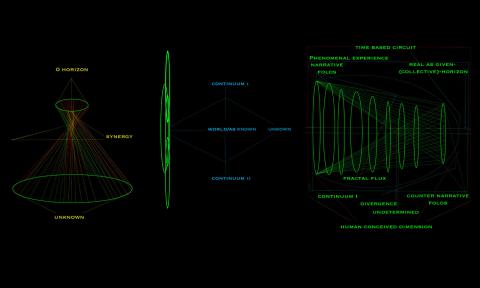
In the Master’s thesis she completed in 2019 within the framework of the CCC, Laila A. Torres Mendieta uses the performativity of fiction theory to create what she calls “fissures” in the model inherited from colonialism in terms of class, genre and race relations, beginning with the example of her native Mexico. Her critical writing creates a space in which non-western narratives sensitive to feminist intersectionality can be voiced as a means to enable counterfactual universes. Horror plays an essential role in this ambition, insofar as it presents a paradox of discontinuity, dimensions and time, both in the sense of the time in which we’re living and the fractal futurities we shape via science fiction. The thesis is introduced by an interview with Torres Mendieta as well as the text from the Actes de recherche published by CCC. -
rano rano, naming, listening to, refusing the coloniality of the exhibitionary complex
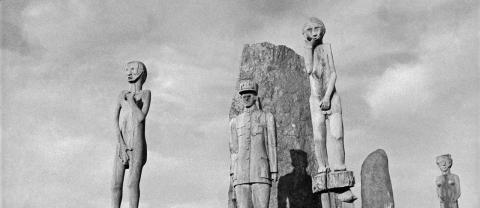
The research conducted by Léa Genoud within the framework of the CCC Master’s research programme in 2019 is a reflection on the coloniality of the museum - a product of Western imperialist history - and more specifically on the very format of the exhibition. From different artistic and theoretical viewpoints inspired by the postcolonial, decolonial and Black Studies field, her approach to this widely debated issue is to tackle the non-questioning principle when it comes to the hegemonic history of the museum and, most importantly, the articulation of the museum’s gaze technologies, from ethnographic photography to contemporary performance. -
Love is what you want
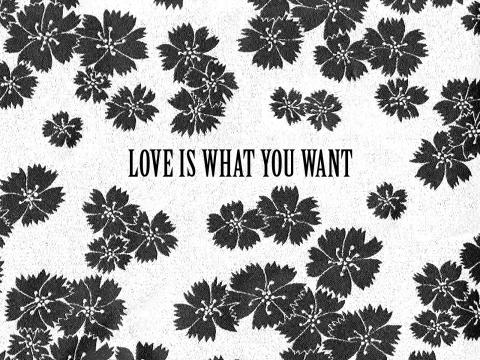
Through a montage of texts and interviews with artists and authors, Diane Rivoire traces the links between art, love and friendship, the love of art and workplace friendships. Some passages are borrowed and have been subtly updated while others are personal writings inspired by lived experiences. The conversations in which Rivoire engages, chapter after chapter, are the opposite of the image of passivity usually associated with the posture of the female admirer. This panorama of chatty and, directly or indirectly, loved figures is the starting point of a process of production of the self as an artist, a lesson of appropriation in its own right. Rivoire 2020 Master’s thesis comes with an introduction by her tutor Jill Gasparina. -
Clara, Chuck et les autres
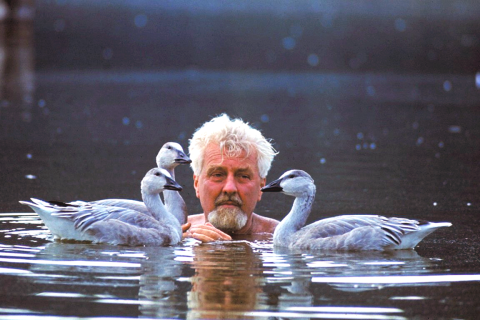
Laura Spozio proposes a reworked version of her 2019 Visual Art Master’s Thesis for this online publication. Readers can choose between two non-linear entries. The first story is of a literary nature, created from a collection of anecdotes taken from ethology, human sciences, philosophy and communication sciences. The second story, which is of an analytical nature, comes back to some researchers in cognitive ethology who make a complementary use of different observation and experimentation methods. Through this mirror perspective, Spozio seeks to restore anecdotal narratives to favour in science, taking a pragmatic viewpoint to understand interspecies relationships. -
N'importe quoi mais pas ça
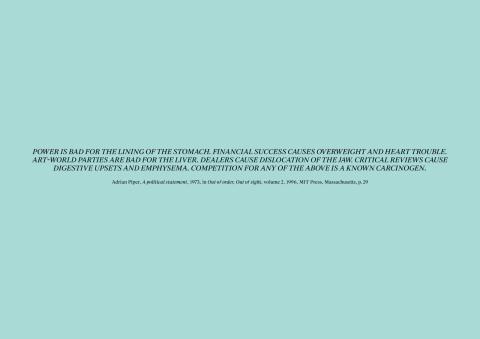
Johana Blanc’s 2020 Work.Master Master’s thesis collects together a series of peremptory judgements sprinkled by some artists, critics and other authority figures of the art world when talking about art. Banishing some practises, the line they take clashes with the breaking up of the art field in the 20th century, which has ceaselessly included new forms on the principle that anything could potentially be art. With a marked sense of derision, Blanc navigates these double binds for an art student, outlining a personal stance anchored in practise. Her Master’s thesis is introduced by a text by her tutor, David Zerbib. -

Sustainability Revisited
In her Fashion and Accessory Design Master’s thesis, Tara Mabiala tackles the question of sustainability in fashion through an affective and political approach. Instead of focusing on an optimisation of production modes and raw materials, Mabiala takes an interest in the other side of the equation, namely our relationship to clothes. Starting from the idea that sustainability implies a notion of caring for the environment, but also for ourselves, Mabiala engages in a reflection on the notion of “self-care.” She confronts this notion with case examples, citing the outfits of black activists from the civil rights movement and punks as examples in which singularity and the collective meet. Her research is presented under the form of an interview conducted by Aude Fellay, in charge of theory in the MA in Fashion Design, and a mood-board bringing together the essay’s hypothesis.
-
Earth( e)scape. The Raising of Chicago
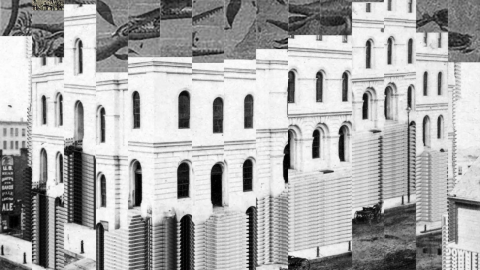
Raising of Chicago, a visionary project of the 19th century engineering, was a project consisting of lifting the whole city up to 14 feet above the city’s original location. Such projects blending the real and the unbelievable were bringing the tradition of technology used to execute wonders or spectacle, which was disappearing at the time, back to life. The evolution of the perception of the relationship between the city of Chicago and the Earth is closely linked to the 19th century imaginary, represented in the research especially by the miasmatic theory and technological optimism. The perception of the city’s natural conditions and the steps leading to the project clarify the raising and its aspirations. In order to discover the relationship between the raised city and the Earth, the raising is studied in the context of the 19th century imaginary and theories of built environment. -
Face à face
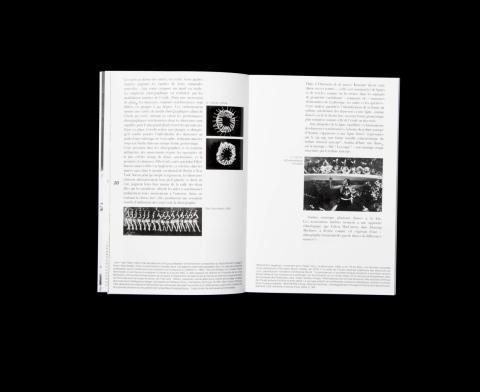
In 1935, during French colonialism in Maghreb, the Franco-British moviemaker Edmond Thonger Gréville finished his movie Princess Tam Tam, starring Joséphine Baker as a poor young Tunisian woman named Aouïna. In the movie, Max de Mirecourt, a French writer bored with the Parisian life he is leading with his wife Lucie, moves to Tunisia where he meets Aouïna. An ambiguous relationship begins to develop between them. Max, in the role of the coloniser, chooses Aouïa as the heroine of his new novel. Aouïna plays a double role, personifying both the colonised and the Princess from far-off Africa. Amandine Lécuyer’s Space and communication Master’s thesis Face à face is based on the comparative study of the female dancers’ synchronised and syncopated rhythms in Princess Tam Tam. The dances reveal a political dimension, which comes to life in the movements of both the synchronised dancers and Anouïna: from the exploitation and androcentrised representation of the female body to colonialism and hierarchisation. An interview with Lécuyer introduces the Master’s thesis. -
Shot on auto mode
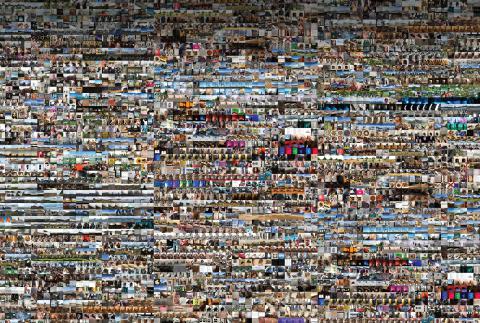
For most of us nowadays, taking a photograph usually consists of tapping a smartphone screen, setting off a series of operations which lead to a ready-to-share image for social media. The angle, framing and even retouching are carried out automatically by multiple processes which mobilise the complex resources of the smartphone – a pocket-sized computer in its own right – without us even noticing. Through an imaginary exhibition catalogue, Tammara Leites’ thesis deals with how digital automatisation techniques are occupying an ever-growing space in the mainstream use of photography. By combining an historical viewpoint to the selection of a series of art projects which explore the vernacular dimension of photography, Leites interrogates the ways in which the delegation to automatic features has shaped both usage and content. -

Converser à l'ère de l'autocomplétion
This Media Design thesis by Mathilde Buénerd, defended in 2019, explores autocompletion, the omnipresent tools which help device users write their daily text messages or complete online forms. Starting from a reflection on the normalisation of language that autocompletion tends to provoke, Buénerd engages in a criticism of some of design’s totem principles, including usability, calm technology and invisible design. Concerned with making users more aware of the tools submitted to them, Buénerd suggests the concept of a spiced-up technology and how it could be put into practice, hinting at both a closer and more flexible collaboration with the machine. -
Arabic letter-forms in motion
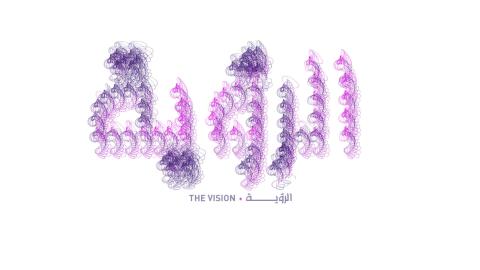
This 2020 Media Design Master’s thesis is dedicated to the design space for Arabic letter-forms in motion. It is an excellent introduction to the subject, which François Harik tackles from the angle of technology, while pointing out that the question itself cannot be dissociated from political and cultural concerns. Harik’s thesis begins with a very well-documented state of the art. This shows the paramount importance, in the digital context, of matters such as the sources of Arabic typography in handwriting, the framework typography has fixed for and in Western European languages, and the non-Latin writing systems’ standardisation and harmonisation processes. Harik then reminds us of the lines of enquiry currently being followed by designers: for instance how to breach typographical codes so as to make full use of computer graphics potential, or now to reinterpret Arabic calligraphy’s guiding principles in the digital type design space. By taking a closer look at recent research done on temporal typography, François Harik then focuses on Arabic letter-forms but in the field of motion design. And thus he puts forward the problem he faces in that field: how to set Arabic letter-forms in motion and how to represent them if these are fixed and limited by the existing type design space and the rules it implies? Harik’s thesis is introduced by Daniel Sciboz, lecturer and tutor in the Media Design Master at HEAD – Genève.