-

Écrire l’histoire trans*
Trans history grows in the interstices and in-betweens of institutions, disciplines and countries. It appears as an intellectual space that blends a great diversity of forms of writing, materials, contexts, and positions. The programme of this conference bears witness to this undisciplined richness, bringing together art history, political history, militant and community history, mediaeval and contemporary history, black and decolonial theories, and thinking on archives and creative research.
-

Une Silhouette cauchemardesque
In Black On Both Sides: A Racial History of Trans Identity, C. Riley Snorton examines American trans historiography through the prism of racial issues: how do gender and race interfere and intertwine in trans and black lives? How do concepts such as that of passing and gender fugitivity circulate between the lives that stand on the edge of the American slave-racist world as well as those that stand on the edge of patriarchy and cissexism? ISSUE features a chapter from Snorton's book in a new and previously unpublished translation by Mabeuko Oberty.
-

Swamp Tales, Trans Ghosts, and Nonbinary (Magical) Realism
This talk focuses on how nonbinary, as an analytic, becomes a portal for rethinking dominant conceptions of temporality, territory, and form within and across social difference. Beginning with literary and media depictions of the Green Swamp and Honey Island Swamp monsters—swamp tales that bring the 18th and 19th century into the contemporary moment—this talk highlights the monstrosity of fugitivity.
-
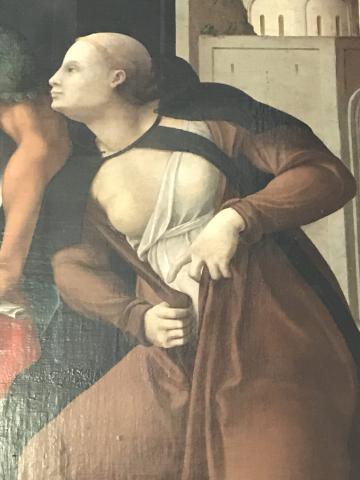
Eugenix, Hyacynth and Protus, Trans* and Eunuchs in Roman Catacumbs
Can we make trans history before the emergence of first-person narratives, and before the very conceptualization of trans issues? The hypothesis this paper develops is that the study of premodern gender transitions can teach us other ways of looking at gender that complicate our current perception, and open up perspectives for future trans people.
-
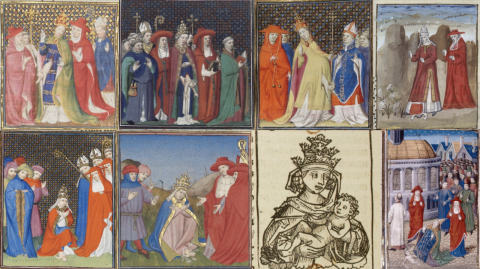
The Pope is giving birth, iconography of a masculine parturition
The 13th century in the West gave rise to the legendary tale of a parturient pope, that of the popess Joan. Although this story is at the heart of a rich literary, iconographic and historiographic production, from the 13th century to the present day, it has only been considered through the reading grid of a single possibility until now, the cis possibility, that of the sole congruence with her assigned sex: Jeanne, a woman, disguises herself as another, as a man, and in so doing, cross-dresses and hides. This possibility alone does little to account for the range of medieval possibilities: Joan is also John, and John himself is possibly a trans man.
-
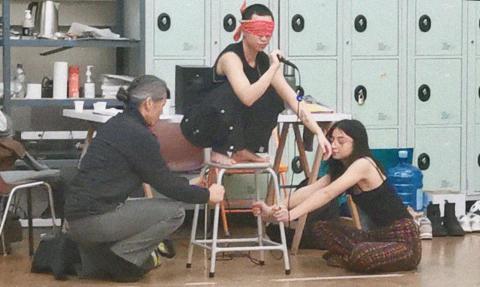
Élaborer le bruit
This contribution is the starting point of the research called « Élaborer le bruit. Les identités en traduction », which Ève-Gabriel Chabanon is conducting as part of a practice-based doctoral thesis in art, registered simultaneously at the Villa Arson in Nice and at the University Paris Cité. It explores the work of the poet Justin Chin, and its possible translations.
-

Composite Curation
Imagine yourself in a photography museum.
-

Autofiction Afrocosmic
In this contribution, Nayansaku Mufwankolo discusses their writing practice, autofiction afrocosmic poetry, and reads one of their poem.
-

Conjured away
In post-World War II Guadeloupe, a community of gender-nonconforming individuals was instrumental in preserving and transmitting traditional drum culture. In this presentation, Michaëla Danjé analyzed some of the modalities of this erasure and the historiographical disappearance of this community. -
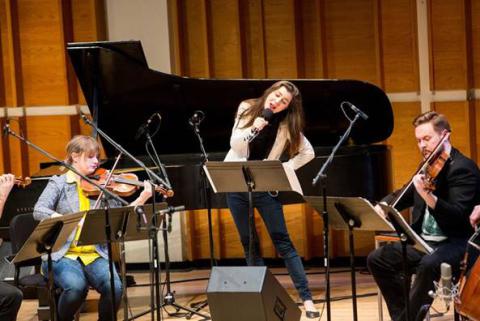
Writing a Transfeminist Archive of Feelings with Strings
In this paper, Liz Escalle-Dyachenko discusses three pieces for strings from the 2010s by three trans and non-binary composers of contemporary music based in the United States.
-
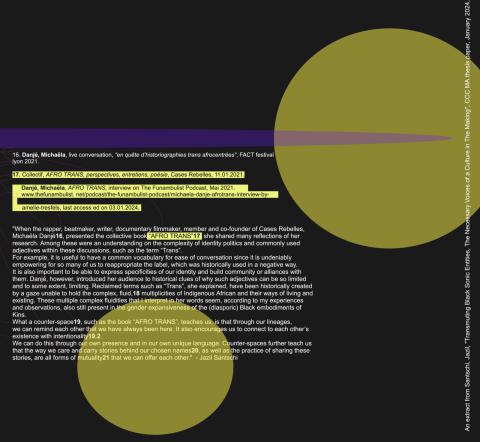
Transmuting Black Sonic Entities
An excerpt from Jazil Santschi's CCC master thesis, "Transmuting Black Sonic Entities. The Necessary Voices of a Culture in the Making". -
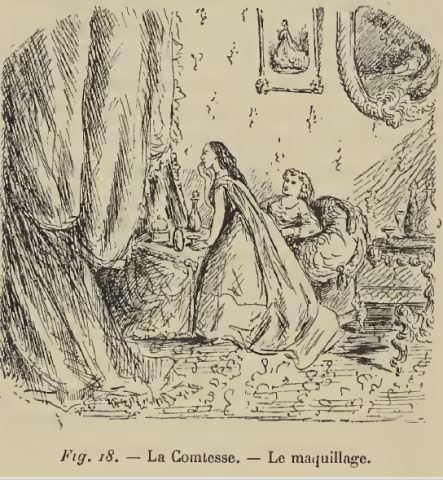
Transitioning is Kid Stuff: Trans*/Childhoods at the Turn of the 19th and 20th Century
This contribution explores the reality of trans children's lives, the social contexts in which they evolve, their games and their emotions; but also trans children's struggles, the strategies and spaces of autonomy they deploy to cope with the multiple violences they experience.
-
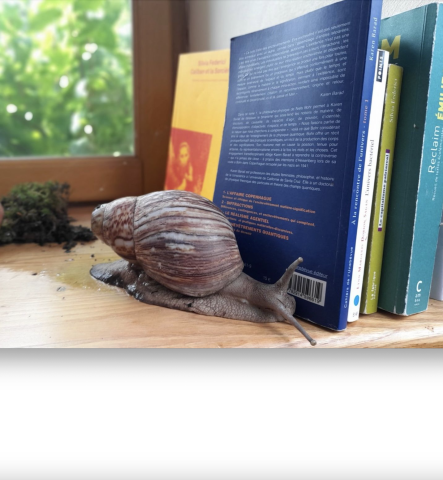
Notes on trans*grievability
Could we learn to grieve without fetishizing our dead (human or more-than-human)? Could we spend more time with our dead without making them into “steps” in the advancement of other causes?
-
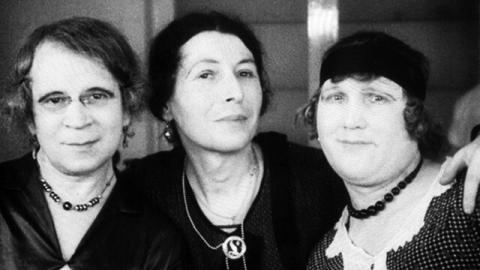
Where does care fit into our trans hirstories? Thwarting medical tropism
Medical violence is central to the narration of our past and present trans experiences, and also structures the way trans hirstory is collected, constructed and told, both epistemologically and materially. Drawing on an experience as a community researcher, trainer and care professional, this talk illustrates three forms of violence imposed by the medical establishment on trans hirstory, and three ways in which we can respond by constructing a narrative that neither over-medicalizes nor erases the materiality of trans bodies. Thwarting the forces of attraction and repulsion imposed by this medical tropism enables the transmission of a trans hirstory that is itself a source of care. -

The Incompleteness of the Archive Belongs to Us
Invisibilisation, erasure, dispossession; numerous are the forms of incompleteness affecting trans* archives. Writing a compensatory or reparative trans* history often proves to be the solution. However, other archival strategies and practices – such as resynchronising bodies with archives (the living archive) and leveraging the iterability of archives – open up a space for freedom and encounter in archives that is proportional to the ever so great desire that archives arise in us.
-

Respectability as a constrained political strategy
This talk presents the provisional results of a research currently being carried out as part of a PhD on mobilizations for the health of trans people in France, from the late 1970s to the late 2010s.
-
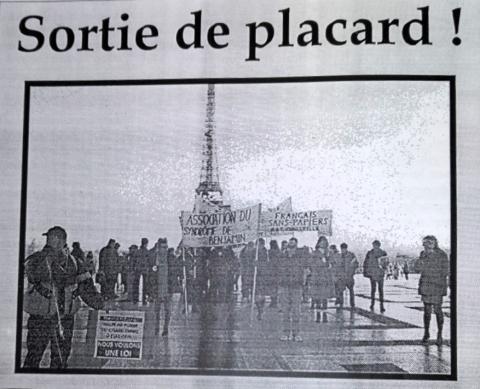
“Existence as resistance”: Existrans as a platform for trans struggles in France
Through a methodology based on Oral History interviews and archival research, this communication focuses on the theatrical strategies developed by trans activists to platform their revendications in France. It centers the analysis on the Existrans/ExisTransInter, the largest visibility-oriented event for trans rights in France. As visibility-oriented activism is raising more and more scepticism among trans activists, this communication raises key issues concerning the future of the ExisTransInter.