• publications
    • authors
    • contribute
    • about
    • Issue to pdf
  • Issue publishes the critical, practical, and theoretical thinking carried out at the HEAD – Genève.
    • français
      • instagram
      • newsletter
publications
  • publications
  • authors
  • contribute
  • about
  • Issue to pdf
    • instagram
    • newsletter
  • français

Dossier #28

Animals

For animal individuality

‘The animalisation of animals is a perpetual condemnation.’ (Kaoutar Harchi, Ainsi l'animal et nous, Arles, Actes Sud, 2024, p. 23)

In her latest book, Ainsi l’animal et nous, published by Actes Sud in 2024, author and researcher Kaoutar Harchi traces the long, drawn-out trial to which humans have subjected animals over the centuries. Debating at times their right to exist, at others their right to feel, human society has gradually reified animals. From there, Harchi points out, ‘all that will remain of animals is the animal. A form that is the inverse of the human form, the immutable and radical form of the other, an absent, present, private and appropriated form, the form of the norm and that of deviance, the border form, a form ever so useful for delimiting the worlds of life, the form of waste, of fear and desire, a vacant form, stripped bare, stuffed, a form on display, a form that is there, at our disposal, a form that is available.’ (Ibidem, pp. 23-24)

Whether as an object of belief, a vehicle for perception or simply a reflection of societal change, animals are examined in this new feature through the prism of their representation. At a time when human violence towards the environment is increasingly denounced, animal media coverage calls into question our relationship with others and, more broadly, ‘the living’. Art and design offer a possible reinvention of this relationship, providing the space for speculation necessary to renew our system of representation.

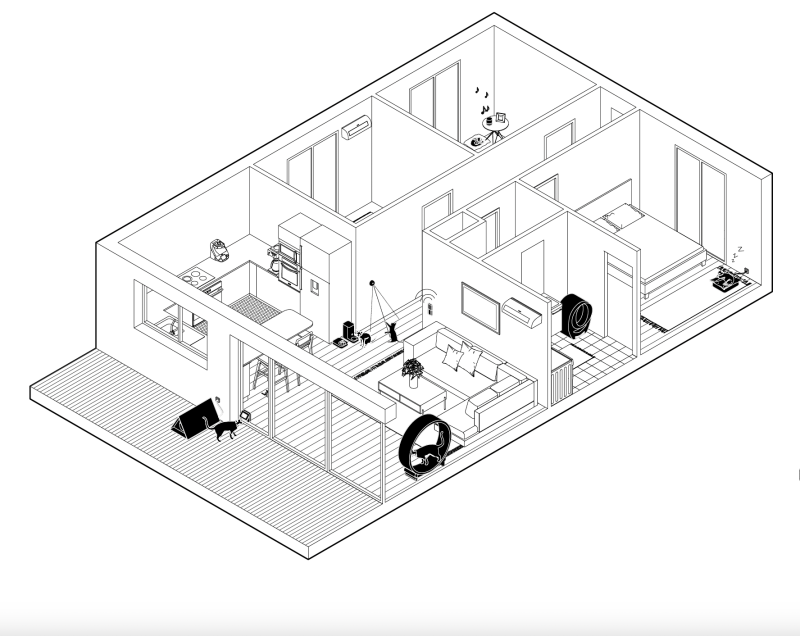
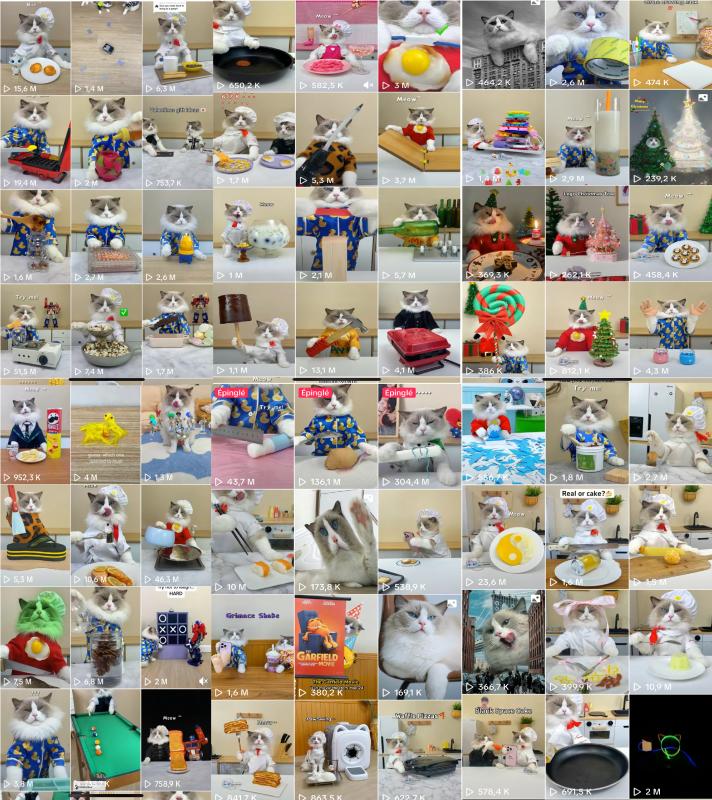
In his article on animal domesticity, Javier Fernández Contreras questions the coverage of pets on social media. As puppets of human owners who care little for their consent, domestic animals become their owners' spokespersons or avatars on social media while, as Fernández Contreras tells us, ‘their corporeality, constrained by human intervention, blurs the lines between subject and object’. Echoing this analysis, the architect Lluìs Alexandre Casanovas Blanco reports on the explorations carried out during an MAIA Master's workshop, in which the interior spaces encourage us to shift our gaze and rethink relationships between human and non-human living beings in a more horizontal way. By studying the differentiated needs of wild and domesticated animals and taking into account well-being and emotions in adapting interior spaces for mobility, students developed a forward-looking and critical approach to the cohabitation of species.

The overuse of pets on social media is thus being countered by initiatives that encourage the deconstruction of stereotypes.

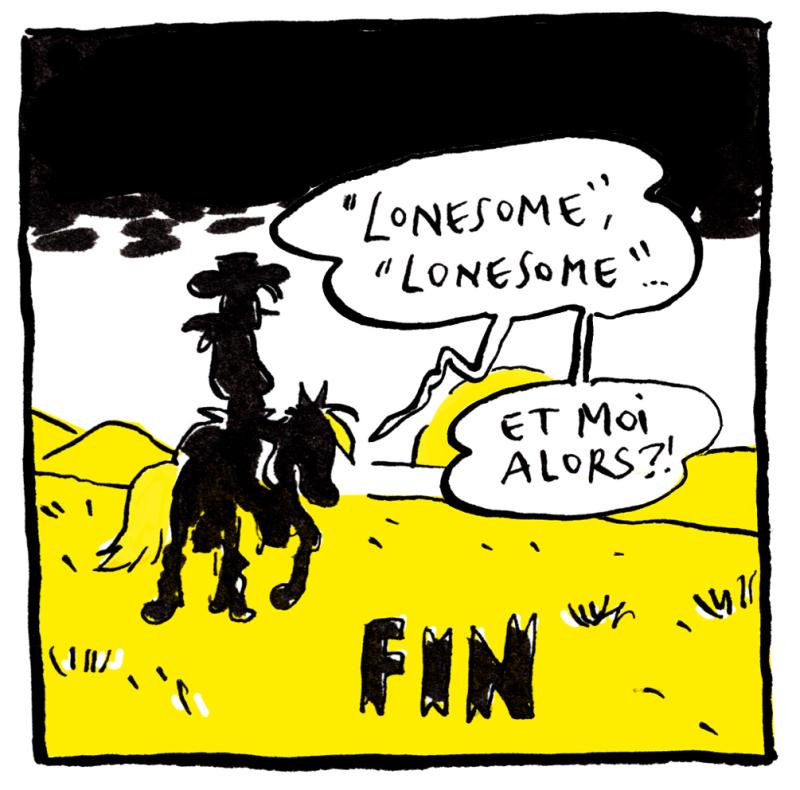
Inspired by the test devised by Alison Bechdel to identify instances of non-discriminatory scenarios for women in cinematic fiction, HEAD graduate illustrator, Fanny Vaucher, has created the SIMBA test, adapting the concept to the representation of animals. Many thinkers have established a link between the oppression of minority populations and that of animals, which, like them, are often deprived of individuality or reduced to their relationship with others. How can fiction reinvent itself by making room for the animal's point of view? Fanny Vaucher answers this question both in images and during an interview.

A crucial issue in today's world, the animal embodies both the disconnect between humanity and the living world as well as humanity’s awareness of the growing vulnerability of an ailing ecosystem.

Enjoy your reading!


by
  • Julie Enckell Julliard
read morereduce
  • departmentarchi. intérieurcinéma
  • subjectactivismeanthropologiearchitecturecinéma/audiovisuelbande dessinéeécologie
  • published on july 07, 2025
  • permalink https://www.hesge.ch/head/issue/en/issues/animaux-julie-enckell-julliard
  • licence CC BY-SA 4.0
informationsback to publication
  • Influenceurs à poils

    by
    • Javier Fernández Contreras

    La saturation médiatique, au niveau de la consommation comme de la production, fait surgir des questions inédites sur les relations non humaines, y compris avec nos très chers amis à poil. Les animaux de compagnie occupent la majeure partie de notre flux de médias sociaux, mais très peu de notre attention intellectuelle. Dans cet essai, Javier Fernández Contreras se penche sur leur histoire au sein de la vie domestique.

  • Domesticity / Domination

    by
    • Sawako Bolch
    • Lluís Alexandre Casanovas Blanco
    • Mariia Fomina
    • Leila Kasmein
    • Frida Law
    • David Röder
    • Ana Karina Zepeda Aranda

    Instead of situating interior architecture as an all-encompassing field that designs the domestic cohabitation of animals and humans, the workshop given by architect, curator and scholar Lluís Alexandre Casanovas Blanco for students of the Master of Arts in Interior Architecture at HEAD – Geneva used this discipline to critically examine the validity of this historical phenomenon from a material and spatial perspective. Moving away from the notion of a “pet” – questioned by new theoretical approaches to the relationship between humans and non-humans – the workshop aimed to identify the traditional role that interior design plays in animal domestication within home interiors. Its ultimate goal is to envision non-hierarchical relations that diverge from the imposition of human-centric materials and spatial domestic standards onto other species.

    Students collectively worked as a research unit on a graphic publication to be presented at the end of the workshop. After reading several key texts from fields such as the history of science, biology, and philosophy, they mapped out current discussions regarding the presence of animals in domestic spaces through clippings from general printed and online media written in the languages each student speaks. This included new legal frameworks, political polemics, the transformation of the home, the design of new architectural artifacts, etc. As a means of making the workshop’s discussions public, students’ ongoing research is published in ISSUE.

  • Un test de Bechdel du spécisme 

    by
    • Fanny Vaucher

    What if there were a Bechdel test equivalent for the representation of animals in works of fiction? French-speaking Swiss comic book author Fanny Vaucher makes a proposal in this direction.

  • Sortir du récit de la domination exercée sur les animaux

    by
    • Julie Enckell Julliard
    • Fanny Vaucher

    Why use the Bechdel test model to assess the representation of animals in works of fiction? Julie Enckell speaks with HEAD – Geneva alumna and illustrator Fanny Vaucher about the SIMBA test she developed in 2024, at the intersection of her artistic practice and her anti-speciesist activism.