browse summary of Issue #9

Against a deluge of images, certain forms of montage, compilation and spatialization allow for a critical engagement with images. Doreen Mende looks back at the approaches of Soviet women editors and the artist Harun Farocki, who distinguished themselves in this emancipatory "new pedagogy of images," while Claire Atherton evokes Chantal Akerman's film installations and Olivier Zuchuat looks at the internal construction of Roy Andersson's shots, which are conceived as paintings.

  • A
  • A

We Live Montage
Lecture: Doreen Mende

In the current technopolitical conditions, the circulatory capacity of an image and the force it acquires through this process has surpassed its meaning. This talk reports from the research of methodologies of emancipation by images such as those of the women collective “montazhnitsy” beyond the frame as counter-navigational practices.


Claire Atherton in conversation with Bertrand Bacqué

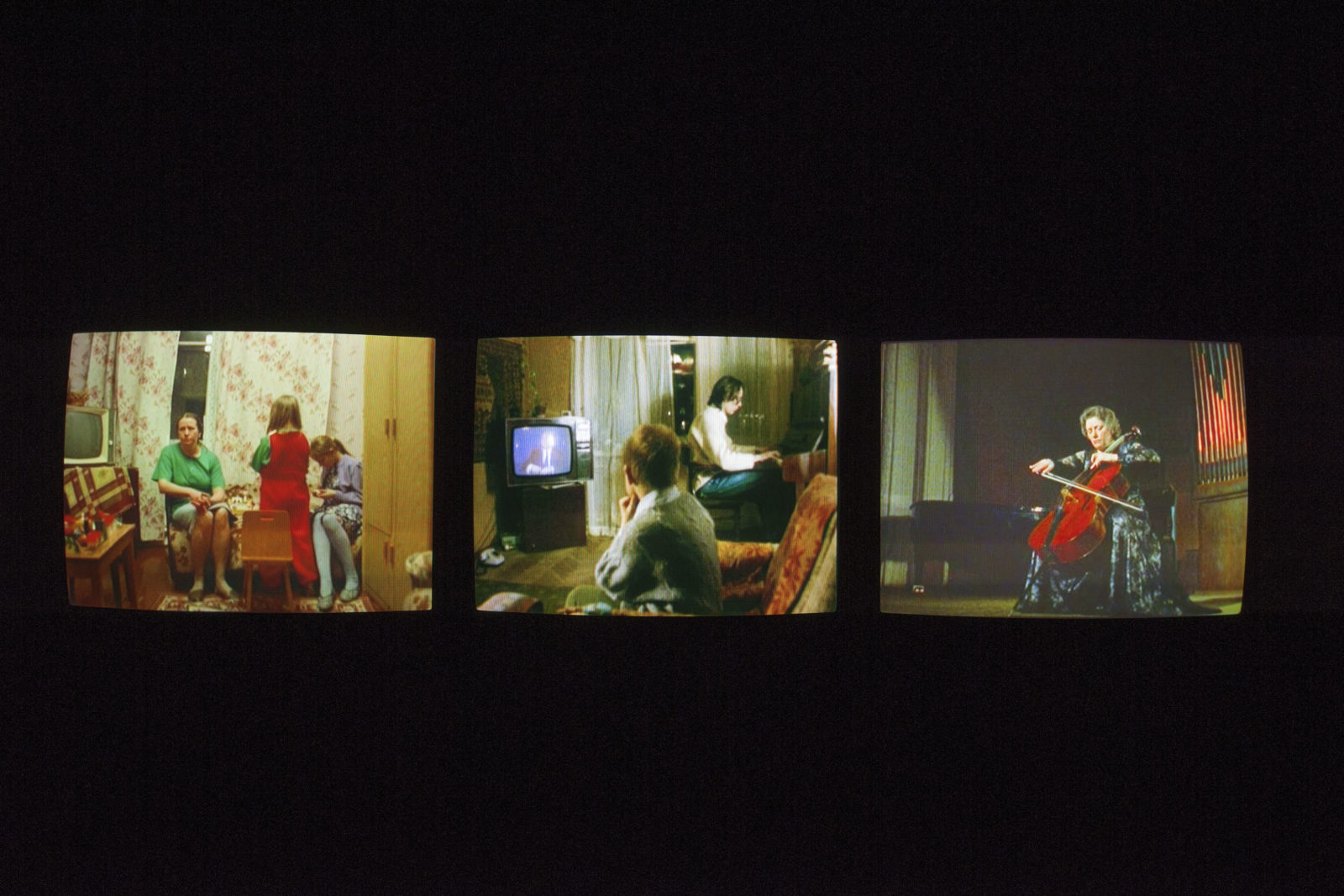
How did Chantal Akerman go from the feature film D'Est to her first installation D'Est: au bord de la fiction? What new relationship between images and sounds does this create? Claire Atherton answers these questions, with supporting examples.

The Tableau Shot in Roy Anderson
Lecture: Olivier Zuchuat

Roy Anderson's films are built around a series of "tableau shots" filmed in the studio. What place does montage have within these long shots? Do they include intra-montage processes?

Politics and Aesthetics of Film Montage. From Cinema to Installation
Round table with Doreen Mende, Olivier Zuchuat and Claire Atherton, moderated by Bertrand Bacqué

chapters

  1. We Live Montage
    Lecture: Doreen Mende
  2. Claire Atherton in conversation with Bertrand Bacqué
  3. The Tableau Shot in Roy Anderson
    Lecture: Olivier Zuchuat
  4. Politics and Aesthetics of Film Montage. From Cinema to Installation
    Round table with Doreen Mende, Olivier Zuchuat and Claire Atherton, moderated by Bertrand Bacqué