-
On the Record
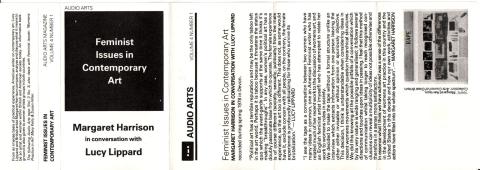
In this essay, the two authors discuss feminist methodologies of the visual arts interview. Adopting the interview to obtain information on women’s experience of art means focusing research on the terms of conversation and language. From this approach comes a critical reflection on the dimension of exclusion in the vocabulary used, which does not have the same meaning depending on who is speaking. If the interview belongs to the category of artists’ writings for criticism and the history of contemporary art, the feminist approach places more emphasis on the voice and the act of talking.
-
In Her Own Words
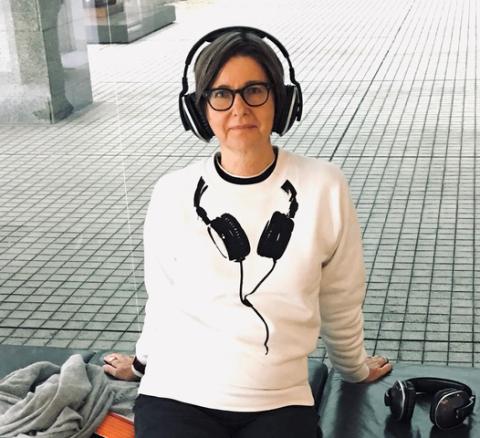
The podcast captures the essence of a conversation that we had with Polish-born artist Marysia Lewandowska in November 2023, at her studio in London. This conversation is the starting point and matrix of the research project In Their Own Words. While tracing her trajectory as an artist from the Eastern Bloc to capitalist England, Marysia Lewandowska discusses how her use of the audio recorder allowed her to connect with the Western art world. From this experience was born her "self-instituted" project, the Women's Audio Archive, an archive of over 120 hours of recordings that has now been digitized. What is the role of an artist's conversation and what status does art history give it? How should it be disseminated? Should it be archived? Should it be edited and, if so, to what extent? This podcast brings together the essential methodological questions raised by this discussion conducted from a feminist perspective.
-
The Exception that Proves the Rule?
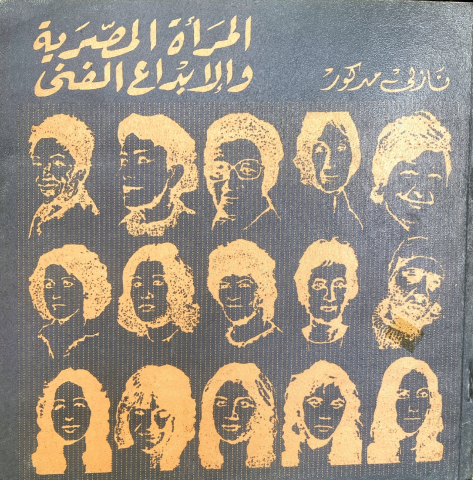
In the late 1980s, because they knew and trusted each other, Nazli Madkour, an Egyptian artist active in the cultural scene, and Nawal El Saadawi, a psychiatrist, writer and feminist political activist, agreed to publish a book that revisited and shed light on the role of women artists in Egypt. The book was published in 1989 under the title Egyptian Women and Artistic Creativity [المرأة المصريةوالإبداع الفني]. In 1991, the Egyptian government's State Information Service commissioned an English edition, entitled Women and Art in Egypt. In an interview with Olivia Alexandra Fahmy, Nazli Madkour looks back on the history of these two books.
-
Voicing the Archive
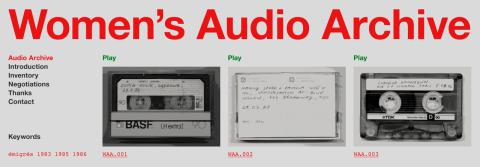
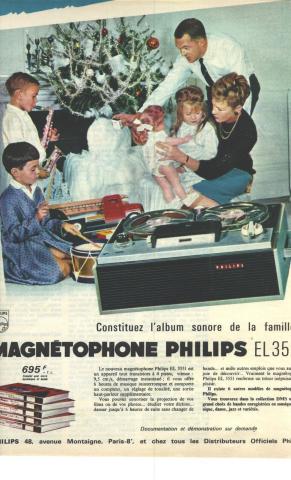
What is the burden of the archive if not memory itself? Can we move on from thinking of archives as stores of data, and closer to an idea of a desiring archive, a reservoir of affective materials and resistant opacities? In establishing the Women’s Audio Archive in London (1985-1991) I had in mind both the collection and a site where the recorded conversations would participate in developing a history of women in the media-visual tradition, which by its ephemeral nature can easily be forgotten. The Archive with its attention to sound acted as an incision in the hegemony of visuality and adjacent commodity values of the 1980s. -
Of Queer Resonance
In the foreword of her collection of tape-recorded interviews Autoritratto (1969) Carla Lonzi challenged her readers with the question: "If it had been possible to record what the artists used to say in their everyday conversations, would we still need to read Vasari’s Lives to find a contact with them?" Conjuring a technological anachronism, Lonzi exposed the very capacity of sound recording to redefine the separation between history and experience. Following her cue, in this paper Francesco Ventrella draws from a series of artist interviews, talking pictures, and other acoustic scenarios to explore how resonance can help us rethink the limits of representation in the discourse of art history. -
"Les parleuses": Conversations on Art in Italy in the 1960s-1970s
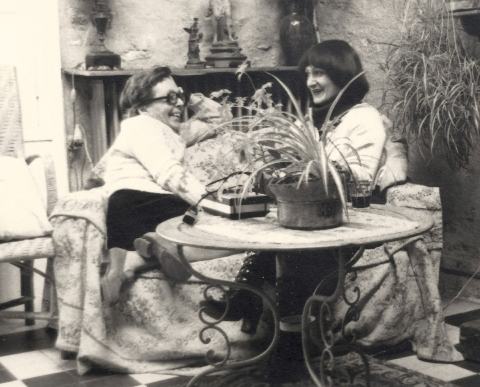
In Italy in the 1960s and 1970s, Carla Lonzi and Anne Marie Sauzeau Boetti, both engaged in the feminist movement, proposed thinking about art through dialogue between artists and generations of artists, beyond established aesthetic categories and groups. They challenged the verticality of genealogies in art history, which were organized in a succession of artistic movements and great artists, in a conception that left aside the ideology of the masterpiece and the creative genius. Drawing on examples from the Italian context, this lecture offers a reflection on the epistemic and political stakes of an art writing based on relationship, dialogue, and listening. -

Two Auditionary Prophetesses Facing Scholars: Hildegard of Bingen and Elise Müller
What is the power of a woman who hears voices in the face of artistic and political authorities? The Rhenish abbess Hildegard of Bingen (1098-1179) was a visionary and "auditionary" prophetess. Her music is still sung, and her voice translated into all languages, even in the feminist journal Heresies. She conveyed a message from another dimension, attested by male authorities (abbots and a pope). The Geneva medium Elise Müller (1861-1929), known by the heteronym Hélène Smith, also had visions and heard voices that dictated her drawings and paintings of Mars, Ultra-Mars, and the Holy Land. She conveyed messages she did not claim authorship of, controlled and doubted by multiple male authorities. These two anachronistic artists, separated by eight centuries, transmitted their voices in the interstices of male control and the definitions of art and vision. -
Art History and Activism: Why Sound Creation?
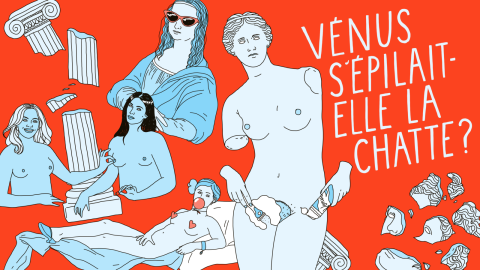
Why use a sound medium to talk about images? What social role can a podcast play? To what extent is it a relatively free and safe space for conveying an engaged discourse? How can we preserve and enhance sound archives? Without claiming to provide definitive solutions to these complex issues, this talk will offer some answers and avenues for reflection. -

ANOL1: The First Encounter
ANOL1: The First Encounter is the first 3D animation of the ANOL1 series that explores the rich tapestry of female mythical creatures from Central Asia, shedding light on their untold stories in a decolonial context. Drawing upon the concept of female monstrosity, the animation aims to underline the intergenerational connections and empower future generations with forgotten narratives.