-
From the Big Screen to the Little Screen
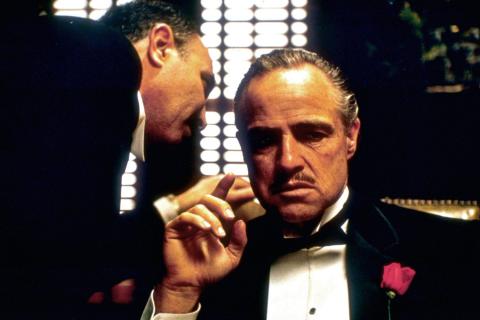
This talk examines the history and practice of converting feature films into mini-series, which has recently been revived by various streaming platforms as a way of boosting ratings and generating more content. The talk analyzes the effects of this practice by comparing different versions of several representative examples, and it primarily focuses on how the process of re-editing generates a new narrative structure and a more dispersed narrative focus that alters our previous understanding of the films under discussion.
-
Hybridizations, in-betweens, film-effect and mini-series effect in The Red Riding Trilogy
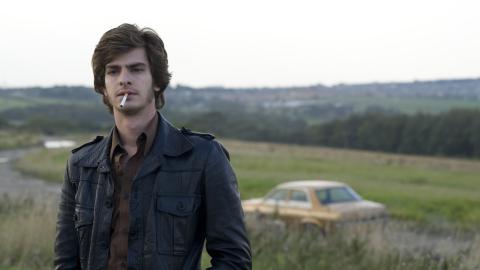
Produced by Channel 4, The Red Riding Trilogy (2009) is a singular audiovisual object. On the one hand, each part of the trilogy aims to offer the viewer the appearance of autonomy. On the other hand, and in the opposite direction, this fiction in three parts makes use of a narrative connectivity whose aim is to produce, between the different segments, discrete and subtle effects of micro-seriality. The purpose of this paper is to study this singular dialectic between autonomy and interdependence, particularly insofar as it blurs the established boundaries between cinema film and mini-series.
-
"Small Axe" by Steve McQueen : towards a limited seriality
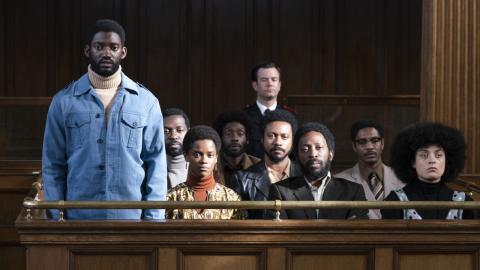
In 2020, British filmmaker Steve McQueen brought together under the name Small Axe a collection of five autonomous films that have as common elements a place (London, Brixton district), a community under construction (from Jamaican immigration), an era (the 70s-80s), the rise of a musical genre (reggae), and above all, the omnipresence of systemic racism against this community. The time spans of the underlying stories are also diverse, ranging from a single night to a period of 10 years. Although this anthology mini-series was produced for TV channels, some of the films that make it up have been shown separately (New York Film Festival 2020, Cannes Film Festival 2020). What kind of seriality, diffuse and minimal, does the Small Axe mini-series offer? -

Power of the in-between, a standard of the Japanese series
The notion of mini-series appears in Japan as the standard format of television dramas. Mostly composed of ten episodes, the series are closed narratives where the initial plot finds its denouement in the final episode, without any possible opening and therefore without continuation. Based on the series Dragon Zakura (ドラゴン桜, 2005) and Kekkon dekinai Otoko (結婚できない男, The Man Who Couldn't Get Married, 2006) I wish to discuss the structural and aesthetic modalities of Japanese dramas, their evolution over time and the link between dramas and cinema threads. -
Top of the Lake: Auteuristic Mini-Series?
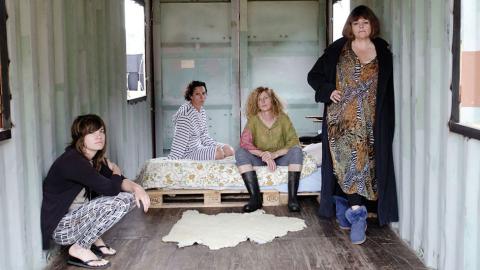
Serial practice often involves a reception that focuses on suspense. But Top of the Lake particularises its treatment of suspense by means of slowdowns in the narrative, constituting a brake on the progression of the plot. These slowdowns are all the more noticeable in a series with a limited duration, and we will question the way in which they thwart the illusion of a narrative primarily centred on the fabula. We will then address the question of serial aesthetics. Top of the Lake recursively returns to sequences that concentrate the mystery in the plot, and these returns determine specific effects on the viewer.
-
The writing process of French mini-series
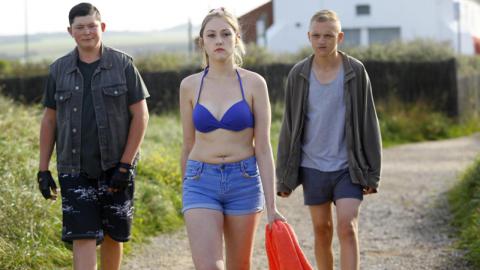
This presentation focuses on the making of French mini-series. Why create a mini-series rather than a series or a feature film? Is it the subject that dictates the format? Or is it rather production and financial strategies that underlie such a choice? How do you write a mini-series? Is it also written by several people? Is orality as present in the creative process as it is in a series? Using primary sources (script documents, interviews, etc.), the aim is to conduct a pragmatic analysis that will allow us to better define the writing process of a mini-series and to understand the reasons for it, but also to propose a socio-economic analysis that questions the choice of such a format. -
"The Third Day", renewing the serial space
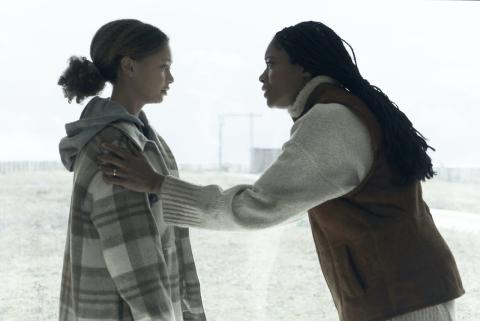
The Third Day is a mini-series consisting of six episodes. A seventh episode, Autumn, is at the junction between the two parts. It was filmed live on 3 October 2020 during a continuous twelve-hour period in the form of a single sequence shot. The episode was broadcast via Facebook Live. The present contribution aims to interrogate the formal inventiveness of Autumn. How was this experiment in audiovisual hybridisation made possible in the context of contemporary television formats? How does it fit into the processes of participatory online reading? In what way does this episode renew questions about how to film the space of fiction? -

Normal People: linkings and unlinkings
From the very first sequence of Normal People, the dynamic of linking and unlinking between Marianne and Connell, which constitutes the narrative substance of the series, structures the mise-en-scène: in a corridor of their high school, Marianne and Connell share the same space (linking), but don't speak to each other (unlinking), while glancing at each other furtively, each attracted and disturbed by the presence of the other (linking), yet feigning indifference (unlinking). This is how their love unfolds over the four years of their lives the series covers, forming the fabric of a sentimental chronicle made up of magnetic attraction and immeasurable desire, wounds, disappointments, and heart-rending break-ups. Linkings and unlinkings seems to represent the matrix behind just about any word Marianne and Connell utter and the most trivial of their behaviour, as well as the most sublime or the most disgraceful of their actions. The series' aesthetic choices also reflect this incessant interplay of linkings and unlinkings. However, linkings and unlinkings will primarily be considered through the format of the mini-series. After all, isn't the brevity of the episodes, with their elliptical writing and dilated temporality, a way of making the chaotic sequence of these linkings and unlinkings more palpable?
-
We Own This City, a coda to The Wire
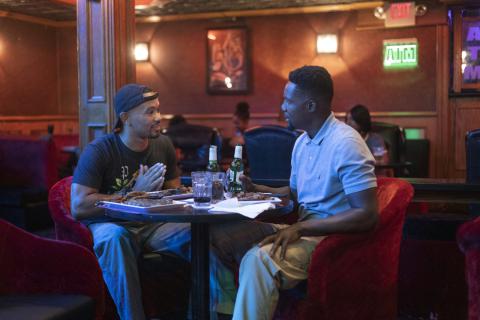
With We Own This City (2022), David Simon returns to his favourite city, Baltimore. Based on Justin Fenton's barely fictionalised investigation, he offers a mini-series that is as dry in its narrative as it is implacable in its indictment of the violence perpetrated by the BPD (Baltimore Police Department). What interests us here is the transition from the long time frame of The Wire's five seasons to the short time frame of We Own This City. What does this mean in terms of narrative and focus? What rewriting of Justin Fenton's investigation did this require? What temporality, particularly fragmented, does this unique season implement? These are the questions we will try to answer in our conference.
-
The mini-series "Five Days at Memorial" versus the long-running medical series: another ethic of disaster
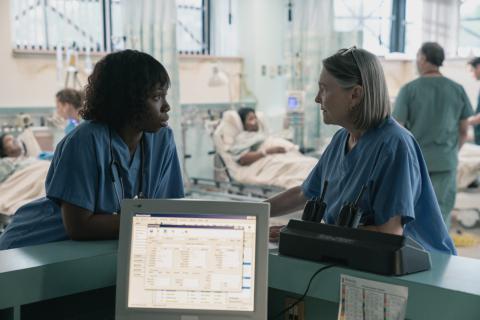
The mini-series follows the caregivers at Memorial Hospital (New Orleans) during and after Hurricane Katrina. The mini-series borrows from disaster films and long-running medical series. Ethically, the miniseries deploys a levelling power (since all the characters are transient for a limited time) but prevents a thorough exploration of the systemic dysfunctions and discriminations that led to the disaster. Between feature film and series, fiction and documentary, doesn't Five Days at Memorial show the mini-series' powerlessness to act on the world? -
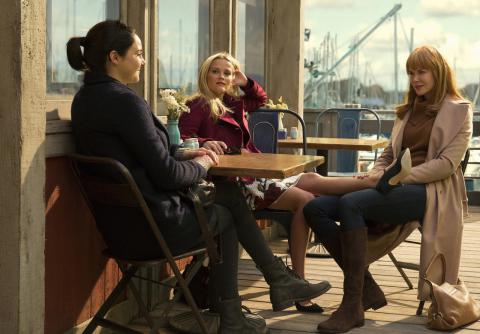
The Star as Author
This talk proposes an exploration of the corpus of mini-series "by" Nicole Kidman, i.e. that she produces and/or interprets: Big Little Lies (2017-2019), The Undoing (2020), Nine Perfect Strangers (2021)... The aim is to analyse the functions of the mini-series for the star (a prestige production which is an alternative to the feature film, and which allows her to reposition herself as an author), taking into account the economic and formal specificities which distinguish these astonishing star vehicles which bear the “Kidman brand“.
-
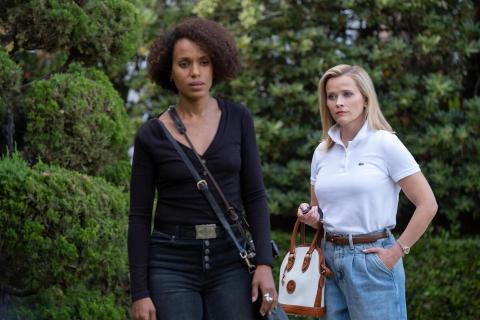
From book club to mini-series, the strategy of Reese Witherspoon
In this paper, we analyze the mode of production and broadcasting of the mini-series adapted from novels and produced by the production companies of actress and producer Reese Witherspoon, Pacific Standard and Hello Sunshine. In particular, we look at the link between Reese's Book Club and the miniseries Big Littles Lies(2017 and 2019) and Little Fire Everywhere (2020). -
User-Generated Seriality
This paper examines true crime documentary mini-series Making a Murderer and The Staircase within the context of their snowball transmedia structure. While their success partly rests upon the spreadable features of streaming platforms, they also owe a great deal to the community activities of dedicated fans on a variety of third-party platforms and social media networks. Consequently, the narrative closure of true crime streaming mini-series and limited-series merely offers an opportunity for further narrative encounters via transmedia user-generated seriality. This amateur transmedia structure prompts reconsideration of forces that undermine the boundaries of the streaming mini-series in the digital age.
-
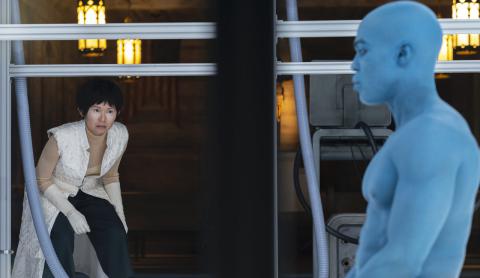
Watching "Watchmen", or the transmediadaptation of contemporary North America
"Watching Watchmen" (HBO, 2019) intends to analyze how Damon Lindelof’s limited TV series could be considered as an example of successful transmediadaptation, acting as a bridge to a beloved comic book while creating a narrative entity that completely holds on its own. As the series offers a continuation of the original comic book, thus creating a transmedia narrative experience for the readers/viewers, it also retroactively updates some of the original content that was intentionally left uncertain in the original comic and enables the series to shape itself into a brand-new story arc. In that space of negotiation between the original narrative and the series, adaptation truly takes shape as the writers’ room adapted what made Watchmen relevant during its original release to the ills of contemporary America.