-
Regard avec le monde
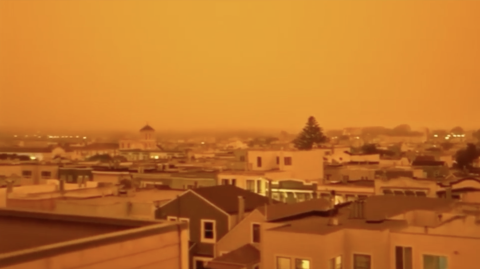
Pauline Julier’s latest film, Follow the Water (2022), focuses on the Atacama Desert in Chile. This desert, the driest on our planet, is home to huge lithium mines, a metal needed for electric batteries. The desert is also an exploration ground for NASA scientists, who find there a Mars soil analogue. Through the use of several channels, Julier mixes perspectives and attempts to describe the relationships between the Atacama desert’s different elements, linked together by the same issue: water. In this Talking Head, Julier looks back at some of her audiovisual productions that are marked by environmental issues, and the desire to sketch out new imaginaries, reconnected to the world. According to her, the dominant narratives of media and blockbusters reflect a false reality by telling out-of-this-world stories: air-conditioned narratives. -
Comment le climat transforme la mode
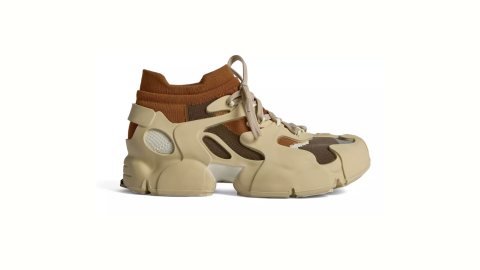
A brand known for its comfortable shoes in bright colours and playful designs, Camper is also committed to the sustainability of its products. From the outset, the company, which was founded in 1975 in Majorca, has used scrap leather and rubber from tyres. In this Talking Head talk, Cecilia Llorens, Production Director at Camper, explains Camper’s policy of reducing the environmental impact of its footwear through single-material models, the use of certified or recycled resources, and even the introduction of compostable materials. At the same time, Camper is looking to increase the lifespan of its products and promoting a counter-current communication approach with the slogan "If you don't need it, don't buy it." -
Numérisation et crise environnementale
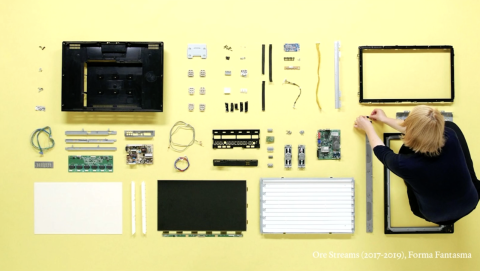
Almost twenty years ago, organisations as diverse as the WWF and the World Economic Forum in Davos were promoting digital technology as a solution to the climate crisis. A growing awareness of digital technology’s environmental impact has since tempered that optimism. In this talk, Gauthier Roussilhe, a researcher and consultant specialising in digitisation’s environmental challenges, takes stock of both digital technology’s positive and negative contributions. Trained as a designer, Roussilhe draws not only on scientific studies, but also on concrete expression in design of digital technology’s carbon footprint. -
No Emission No Exploitation
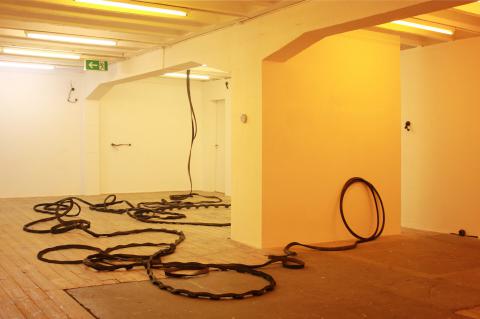
Curators Yasmin Afschar and Elise Lammer are behind the No Emission No Exploitation manifesto, which seeks to put down – in the production of art and exhibitions – an approach decoupled from fossil fuel consumption, all the while promoting social justice. Their initiative aims to foster a dialogue with artists on these issues. For this talk, Afschar and Lammer teamed up with artist Vanessa Billy, whose sculpture and installation work takes a very measured approach to production through, for example, the principles of re-use; sending instructions remotely; and selecting natural materials and returning them to their place of origin after a temporary exhibition. -
There's plenty of room at the bottom
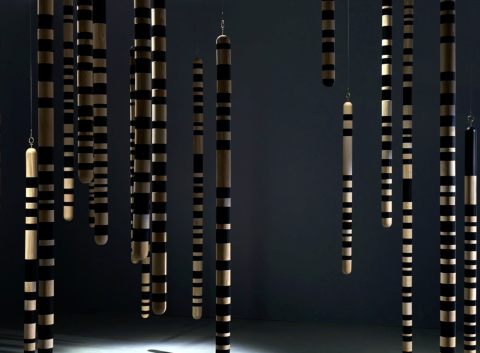
Having noted the limitations of scientific discourse which, in the absence of a narrative to support it, fails to unite people around the shared challenge of saving living things, the designer and artist Marie-Sarah Adénis is developing a hybrid work between cosmology and cosmogony. Her projects focus on the scales of DNA and cells, which she stages in representations where the history of life unfolds in narrative or mythological forms. Alongside her work as a contemporary fabulist, Adénis is conducting experiments with bacteria to develop ecological pigments. In this talk, the former neuroscience researcher emphasises the centrality of storytelling to our world's 'crisis of sensibility'. -
The anthropocene style
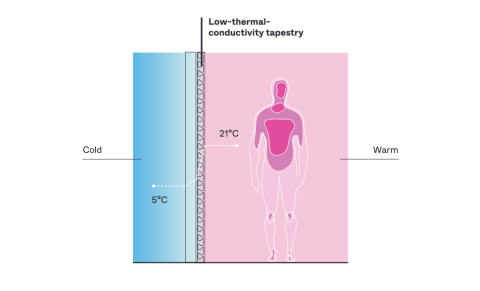
Drawing on his climaticist approach, the architect and initiator of this programme of conferences, Philippe Rahm, concludes this series by recalling the current challenges for creation. Rahm stresses the importance of taking global warming into account in the field of culture, and of mitigating global warming by organising, and giving priority to, a framework of material and practical thought and action. Re-engaging with the dialectical principle of historical materialism leads him to imagine the perhaps inevitable scenario of an Anthropocene cultural style, where films would be shot by candlelight so that projectors consume less electricity during screenings; where contemporary dance would be less acrobatic so as to limit the food consumption of performers; and where designers and architects would invent objects with components that would limit heat loss in winter and keep us cool in summer.