• publications
    • authors
    • contribute
    • about
    • Issue to pdf
  • Issue publishes the critical, practical, and theoretical thinking carried out at the HEAD – Genève.
    • français
      • instagram
      • newsletter
publications
  • publications
  • authors
  • contribute
  • about
  • Issue to pdf
    • instagram
    • newsletter
  • français

Dossier #11

Art and Humanity: What Is Possible? Video Footage of the Symposium

This feature brings together the fields of art, culture and humanitarian action as explored during the online symposium ‘Art and Humanity: What Is Possible?’, organised by the International Red Cross and Red Crescent Museum (MICR), the HEAD – Genève and the International Committee of the Red Cross, in partnership with the Geneva Red Cross, on the occasion of the exhibition Concerned. 30 Artists on Humanitarian Issues on view at the MICR in Geneva from 27 April to 26 September 2021. This multi-disciplinary approach aims to create links and explore potential collaboration between these fields of expertise which seldomly interact with one another. Today’s humanitarian problems are more complex than they appear at first sight. Conflicts are becoming more drawn-out. It is not always clear who the protagonists are. The reasons for conflicts are often hard to discern and their level of violence is not linear. Natural disasters are more violent, more sudden, more frightening, and affect all levels of society. We are taking stock of the impact of pandemics, and all the unknown factors associated with them. The digitization of our societies is introducing new humanitarian issues; we hear talk of cyber warfare, the impact of fake news and propaganda on civilians and the dilemma of the digital divide.
In the face of these challenges, are proposed a number of questions: can art enable us to grasp these complexities and give them meaning? By creating space and time for reflection in ways that differ markedly from those offered by the media, can works of art that address humanitarian issues help us achieve a more nuanced and concrete understanding? How can we ensure that representations of these issues betray neither the people affected nor the situations themselves? Can public, artists and humanitarians benefit from getting to know each other better and learning from each other? Does a dialogue between art and humanitarian action promote individual and collective commitment? What can artistic imagination do when that of a whole people is reduced to ruins? Can the artist play the role of mediator? With humanitarian issues mainly viewed through the media, how can we better relate them to everyday life? Even though humanitarian crises are often in the headlines, they feature as pieces of information, like so many others, mediated through channels such as screens, newspapers and radio that can be laid aside at will. It is easy to keep them at a distance. As a result, it can seem that they are happening elsewhere, far away from us, and only affect others.
And yet these questions are not as distant from our own reality as we might believe. We have all been feeling a degree of vulnerability and distress with the continued experience of the COVID-19 pandemic. We are all aware of climate change and the effect it will have on our daily lives – especially our access to resources. And we have observed the rise of extreme nationalism and vengeful, warlike rhetoric in many parts of the world. Could it be that we will all be directly affected by a crisis, sooner or later? Julie Enckell Julliard (HEAD – Genève), Pascal Hufschmid (MICR), Philippe Stoll (ICRC) Cover image: Anonymous, Keep Red Cross in action: Give! 1955–1957, MICR archives (ARR)  

by
  • Julie Enckell Julliard
  • Pascal Hufschmid
  • Philippe Stoll
read morereduce
  • subjectanthropologieartintersectionnaliténarrationphilosophiepolitique
  • published on january 21, 2022
  • permalink https://www.hesge.ch/head/issue/en/issues/issue-11-art-and-humanity-what-possible-julie-enckell-julliard-pascal-hufschmid-philippe-stoll
  • licence CC BY-SA 4.0
informationsback to publication
  • Art and Humanitarian

    by
    • Olivier Chow
    • Ariane Koek
    • Francesco Zucconi

    Artists who are attentive to humanitarian situations raise the question of the gaze in the face of vulnerability and appraise the risks of voyeurism. More generally, the speakers in this section reflect on the agency of an artwork in how it arouses complex aspects of cognition and emotion.

  • Art and Humanitarian

    by
    • Sophia Milosevic Bijleveld
    • Elodie Paillard
    • Azadeh Sobout

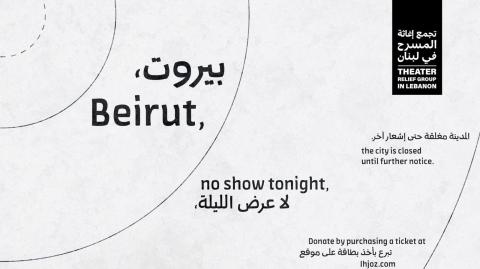
    These conferences tackle the issue of engagement. Beyond representation, how can art enter into dialogue with communities in the grip of humanitarian crises? Through projects in Kenya, Afghanistan and Beirut, the speakers evoke the healing potential of art. The model of Greek tragedy is also introduced as a way of exploring and purging personal and collective trauma.

  • Art and Humanitarian

    by
    • Marc Herbst

    These lectures question the related, though sometimes competing, notions of ethics and aesthetics. Certain symbols make it possible to connect these notions. Similarly, a dialogue between distant perspective and field action allows for the development of a positive entanglement between the two categories.

  • Art and Humanitarian

    by
    • Paola Forgione
    • Katarzyna Grabska
    • Afshan Heuer
    • Luis Carlos Tovar

    This series of presentations looks at some concrete cases in which art and humanitarian aid work together in crisis areas. The speakers bear witness to the positive impact of art, both in their experience as viewers and in their practice. Katarzyna Grabska’s presentation offers final reflections to wrap up the symposium.