• publications
    • authors
    • contribute
    • about
    • Issue to pdf
  • Issue publishes the critical, practical, and theoretical thinking carried out at the HEAD – Genève.
    • français
      • instagram
      • newsletter
authors
  • publications
  • authors
  • contribute
  • about
  • Issue to pdf
    • instagram
    • newsletter
  • français

Carla Demierre

Carla Demierre (CH, 1980) studied art in Geneva and creative writing in Montreal. Her practice ranges across forms that are printed, performed and recorded. Her texts mix poetry and storytelling, formal experimentation and documentary cut-up. Demierre has been teaching Writing at the HEAD–Genève since 2012 while also hosting regular literary events, including the “Mondes Parlés” readings in collaboration with the Centre d’Art Contemporain Genève, and “L’heure du thé,” a series of podcasts and meetings at the Grütli.
  • Sound, Narrative, Performative and Spatial Sequences

    by
    • Bertrand Bacqué
    • Loïse Bulot
    • Carla Demierre
    • Arielle Meyer MacLeod
    • Joaquim Moreno
    • Nicolas Rabaeus
    • Roberto Zancan

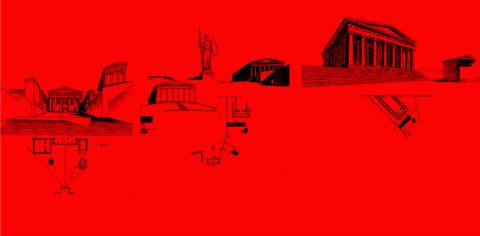
    These lectures highlight the physical and material dimension of montage in various contexts outside cinema. Through musical composition, theatre, architecture or literary creation, montage can be a technique as much as a subject or a metadiscourse; one…

  • The Joy of Writing and Rewriting

    An Interview with Carla Demierre and Fabienne Radi

    by
    • Carla Demierre
    • Sylvain Menétrey
    • Fabienne Radi

    While remote teaching has momentarily transformed their common creative writing course into a podcast, Fabienne Radi and Carla Demierre nonetheless advocate for experiential learning: the experience of reading, writing and rewriting beyond the clichés…

  • D'autres voix

    Review of two Carla Demierre recent publications by Julie Sas

    by
    • Carla Demierre
    • Julie Sas

    With Autoradio, published in 2019 by Héros-Limite, and Qui est là, published a year later by art&fiction, Carla Demierre uses concrete poetry and polyphonic narratives to express the variety of her own voices.